If you spend time listening to Levantine speakers (Syrian , Lebanese , Palestinian , or Jordanian ), you’ll almost certainly hear بالله؟
— a short, expressive word used to show surprise, disbelief, or to soften a request. It’s a great example of how tone and context shape meaning in spoken Arabic.
How Levantine speakers use بالله
Let’s explore how بالله؟
is used in real life 👇
Surprise or disbelief (“Really?”) This is the most common use. Someone tells you unexpected news, and the reaction comes instantly.
💬 Example (Levantine):
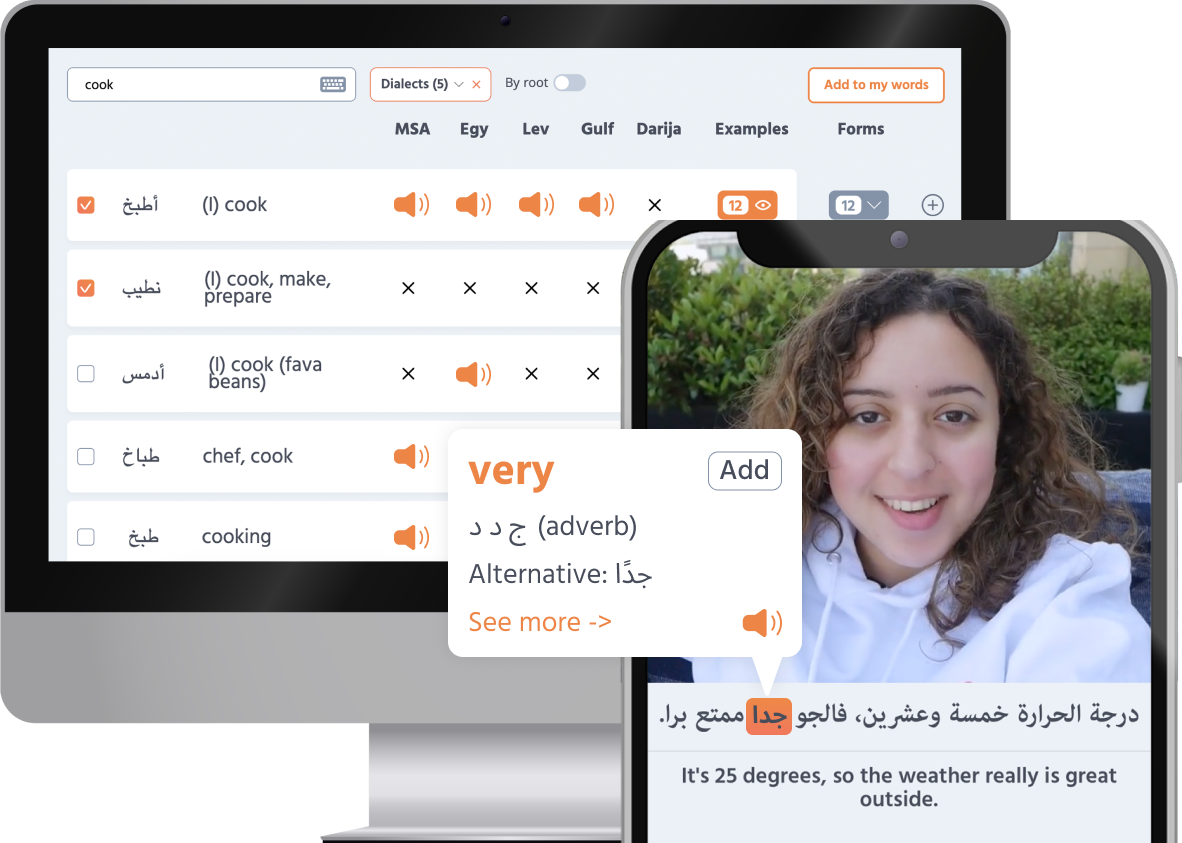
Get free Arabic videos with interactive captions for your level
Get free videos
Asking for confirmation Here, بالله؟
sounds softer. It’s not shock — it’s checking whether something is true.
💬 Example (Levantine):
A man stops random people in Amman, Jordan, asking them to tell quick jokes . This clip features one of those jokes. Light skepticism or playful doubt With a slightly drawn-out tone, بالله؟
can sound teasing or mildly skeptical.
💬 Example (Levantine):
Polite disbelief (social reaction) Sometimes بالله؟
is simply a social response — showing interest without sounding rude.
💬 Example (Levantine):
Polite requests (“please”) In spoken Levantine Arabic, بالله
on its own — when said with a requesting tone — works like “please” in English. What comes after it doesn’t really matter. The politeness comes from the tone, not the structure.
You’re asking a friend to bring you something.
In all these cases, بالله
softens the request and makes it sound natural and friendly.
Note: When بالله
is said with a requesting tone, it functions as “please”, regardless of what follows.
The Syrian video presents various types of annoying customers in restaurants. This clip focuses on the influencer customer who asks for final photos. Formal Arabic vs. spoken dialects In Modern Standard Arabic (MSA)بالله
literally means “by God” and is used in formal, serious, or religious contexts.
In spoken Levantine Arabic , however:
بالله؟
(standing alone) is a reaction meaning “Really?” بالله
(with a requesting tone) works as “please”
Where does it come from? Literally:
So the literal meaning is “By God?”
But in everyday Levantine speech, بالله؟
has lost its literal sense and become a fixed reaction phrase.
Why you should learn it Because بالله
is short, natural, and extremely common. It helps you react naturally, make polite requests, and follow everyday Levantine conversations with ease.
To learn more useful expressions, explore Playaling or check out the blog .