An Everyday Arabic Expression That Means “Don’t Worry”
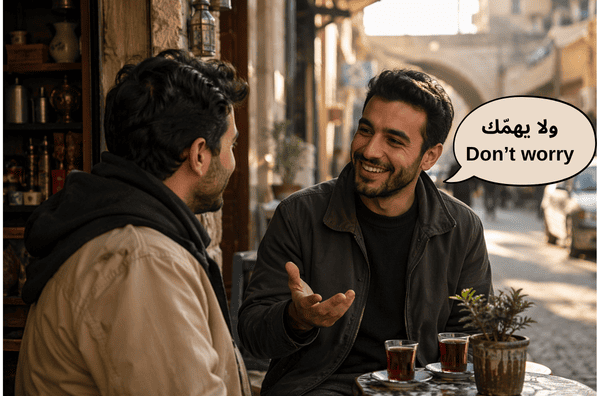
One of the most common expressions you’ll hear in spoken Arabic is ولا يهمك. It’s widely used in Levantine varieties (Syrian, Lebanese, Jordanian, Palestinian), Egyptian, and Gulf Arabic in everyday conversation. What does the phrase literally mean? ولا يهمك Literally: “And it does not concern you.” Word by word: In everyday speech, it simply reassures someone. Get free […]
One Common Levantine Arabic Expression You’ll Hear Every Day
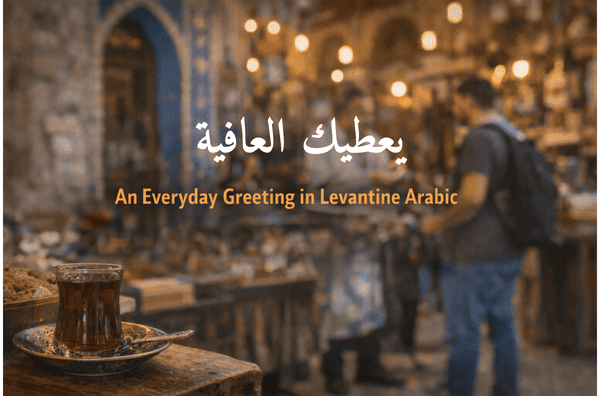
One of the most common everyday greetings in Levantine Arabic is يعطيك العافية You’ll hear it across different varieties of the dialect, whether in Syrian, Lebanese, Jordanian, or Palestinian Arabic. The wording usually stays the same. The meaning shifts with context. What does the phrase literally mean? يعطيك العافية Literally: “May God give you health.” […]
خلاص (Khalas) — The Egyptian Word That Ends, Calms, and Settles Everything
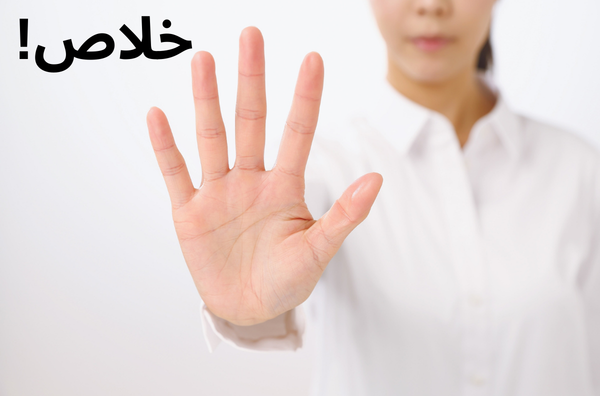
If you spend any time around Egyptians, you’ll hear خلاص constantly. It’s one of those words that can end a conversation, calm a moment, or signal that something is settled, depending entirely on tone and situation. At its core, خلاص carries the idea of done / enough / settled / okay, but what it really […]
How Egyptians Say “Happy Holiday”, “Happy Birthday”, and More

كل سنة وإنت طيب is one of the most common Egyptian Arabic expressions. You’ll hear it in many celebrations throughout the year, and its meaning changes slightly depending on the situation. To understand how Egyptians use it, it helps to start with the literal meaning first. What does كل سنة وإنت طيب literally mean? كل […]
Common Arabic Holiday Greeting

كل عام وأنت بخير is one of the most common Arabic holiday greetings you’ll hear across the Arab world. It’s widely used in Levantine varieties (Syrian, Lebanese, Jordanian, Palestinian), as well as in Gulf and Modern Standard Arabic, especially during holidays, birthdays, and other recurring occasions. Egyptian Arabic has a similar version of this greeting, […]
تفضّل (Tafaddal) — The Arabic Word That Opens Doors, Seats, and Conversations
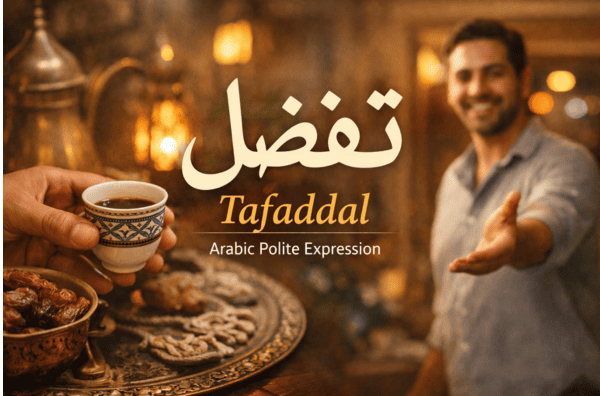
If you spend time in Arabic-speaking communities, you’ll hear تفضل everywhere. It’s one of those words that instantly sounds polite, welcoming, and smooth. It’s a clear example of how Arabic polite expressions work in everyday conversation. تفضل exists in Modern Standard Arabic, Levantine, Gulf, Darija, and Egyptian Arabic as well. In Egyptian Arabic, it’s commonly […]
عن جد؟ — A Levantine Way to Say “Really?”
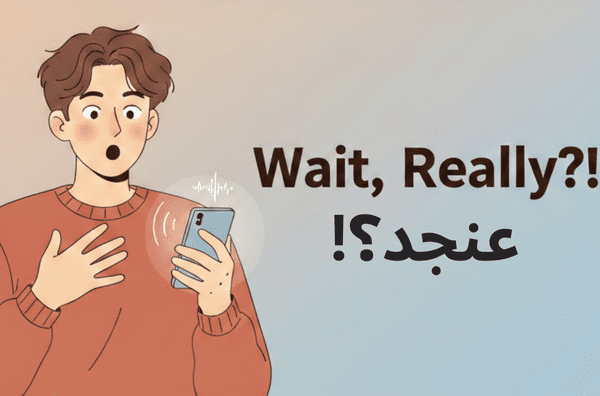
If you spend time around Levantine speakers (Syrian, Lebanese, Palestinian, or Jordanian), you’ll hear عن جد؟ all the time. It’s a short, everyday reaction used to show surprise, disbelief, curiosity, or even sarcasm — depending entirely on tone. How Levantine speakers use عن جد Let’s explore how عن جد is used in real life 👇 […]
بالله — A Levantine Expression for “Really?” and “Please”

If you spend time listening to Levantine speakers (Syrian, Lebanese, Palestinian, or Jordanian), you’ll almost certainly hear بالله؟ — a short, expressive word used to show surprise, disbelief, or to soften a request. It’s a great example of how tone and context shape meaning in spoken Arabic. How Levantine speakers use بالله Let’s explore how […]
!يا لهوي (Ya Lahwi) — The Egyptian Cry of Shock, Fear, and Sudden Surprise
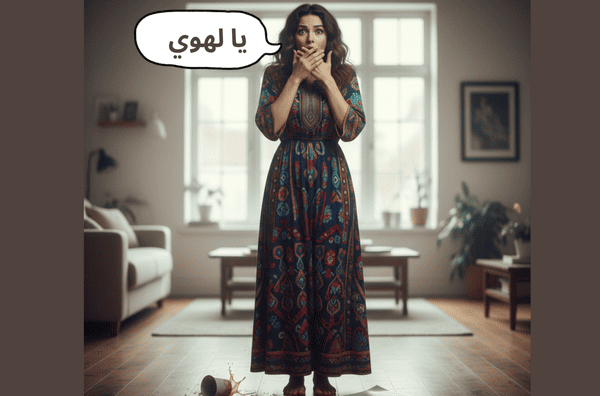
If you spend any time around Egyptians, you’ll quickly hear يا لهوي — a loud, expressive exclamation used in moments of shock, fear, sudden panic, or theatrical exaggeration. Two short words, but a whole world of emotion. Uses and meanings of “ya lahwi” in Egyptian Arabic Here’s how Egyptians actually use يا لهوي in daily […]
شو في؟ — The Levantine Way to Ask “What’s Wrong?” or “What’s Going On?”

If you spend any time around Syrian, Palestinian, Jordanian, or Lebanese speakers, you’ll almost certainly hear شو في؟ — a short, emotional question used for worry, confusion, alarm, or simple curiosity. It instantly reveals how someone feels, even if you don’t understand every word. Let’s explore how people use شو في؟ in real life 👇 […]