How to say what’s yours in Levantine Arabic
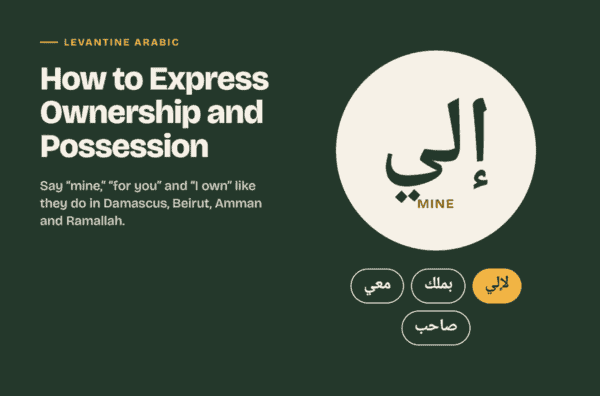
In Syrian, Lebanese, Palestinian and Jordanian Arabic, there are many ways to express ownership or possession. By analyzing thousands of interactive video transcripts on Playaling, we’ve mapped out how native speakers actually express ownership in the real world. Let’s break them down one by one, starting with the most common. ي (my) The most basic […]
How to Say “I Have” in Arabic
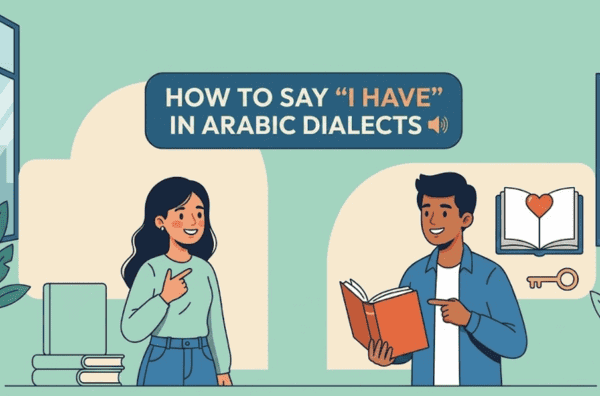
When you start learning Arabic, one of the biggest surprises is discovering that there’s actually no single verb for “to have”. Instead, Arabic relies on prepositions combined with pronoun suffixes to express possession. Let’s break down how to say “I have” in Arabic using the two most universal prepositions: عند and لـ . Expressing “I […]
The “Tied T”: When the Silent Ta Marbuta Makes a Sound
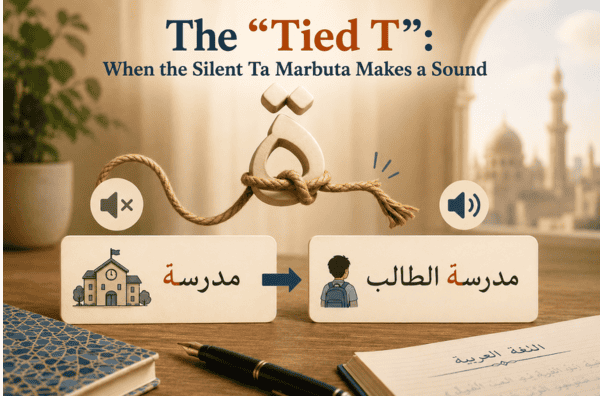
If you are just starting your Arabic learning journey, you have probably run into a friendly little letter that only ever appears at the very end of words: ة. If you are a complete beginner, don’t worry—this letter is actually super easy once you know its secret! Its name is Ta Marbuta, which literally translates […]
How to Say “Of” in Arabic (Hint: You Don’t Always Need a Word)
If you want to express ownership in English, you have two choices: use the word of, or use an apostrophe-s. If you look for a direct translation for the word of in Arabic, you might be surprised. The most common way to show ownership is actually invisible! The go-to method: the invisible connection Whether you […]
The “Invisible IS” in Arabic: How to Avoid a Common Grammar Trap
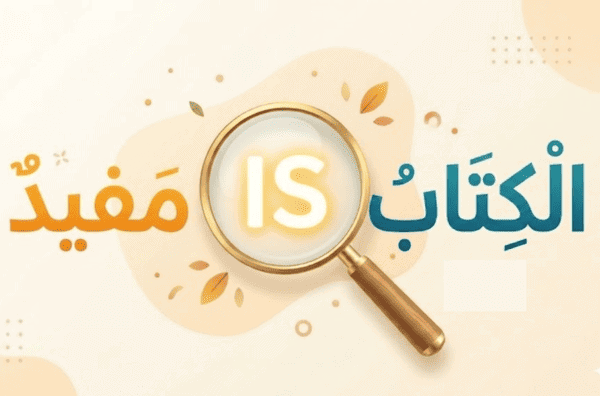
One of the biggest surprises for Arabic beginners is that there is no direct translation for the verb to be in Arabic in simple present tense sentences. Words like “is,” “are,” or “am” are completely invisible. While this sounds like a great shortcut, it creates a tricky grammar trap. If there is no word for […]
Arabic Sun and Moon Letters: The Secret to Smooth Pronunciation
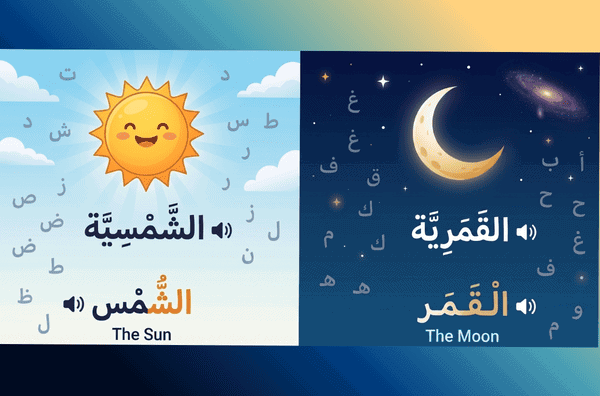
In our previous post on how to say “the” in Arabic, we learned that the definite article is simply the prefix الـ. You just attach it directly to the beginning of a word. Simple, right? But if you listen closely to native speakers, you’ll notice a twist. Sometimes you hear the ل clearly, and sometimes […]
How to say “the” in Arabic (and why it doesn’t always sound like “al”)
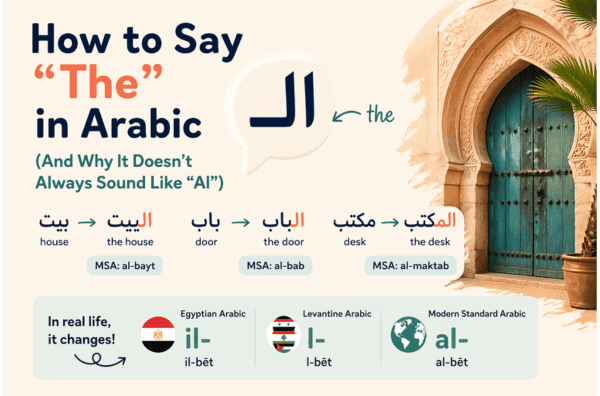
If you only remember one thing about the definite article in Arabic today, make it this: there is no separate word for “the.” Instead of floating next to a noun like it does in English, Arabic simply attaches it. It’s a tiny detail, but once you see it, you’ll notice it everywhere. Here is how […]
An Everyday Arabic Expression That Means “Don’t Worry”
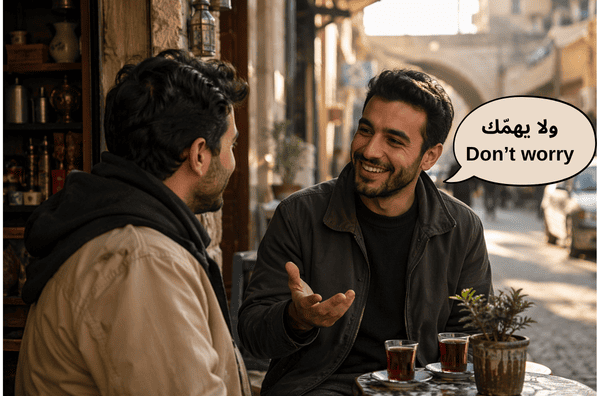
One of the most common expressions you’ll hear in spoken Arabic is ولا يهمك. It’s widely used in Levantine varieties (Syrian, Lebanese, Jordanian, Palestinian), Egyptian, and Gulf Arabic in everyday conversation. What does the phrase literally mean? ولا يهمك Literally: “And it does not concern you.” Word by word: In everyday speech, it simply reassures someone. Get free […]
One Common Levantine Arabic Expression You’ll Hear Every Day
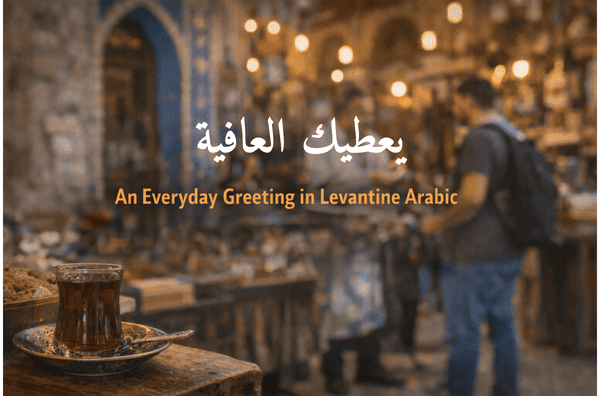
One of the most common everyday greetings in Levantine Arabic is يعطيك العافية You’ll hear it across different varieties of the dialect, whether in Syrian, Lebanese, Jordanian, or Palestinian Arabic. The wording usually stays the same. The meaning shifts with context. What does the phrase literally mean? يعطيك العافية Literally: “May God give you health.” […]
خلاص (Khalas) — The Egyptian Word That Ends, Calms, and Settles Everything
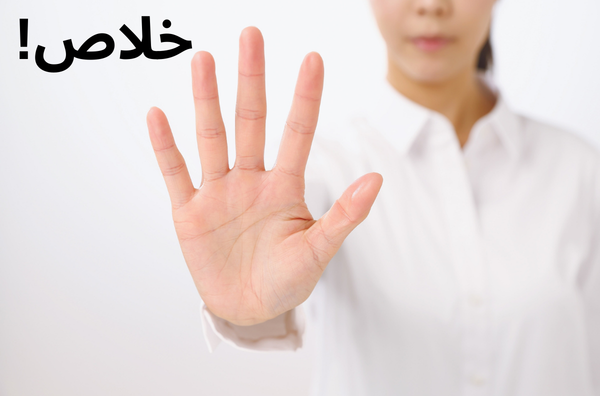
If you spend any time around Egyptians, you’ll hear خلاص constantly. It’s one of those words that can end a conversation, calm a moment, or signal that something is settled, depending entirely on tone and situation. At its core, خلاص carries the idea of done / enough / settled / okay, but what it really […]