If you spend time in Arabic-speaking communities, you’ll hear تفضل
everywhere. It’s one of those words that instantly sounds polite, welcoming, and smooth. It’s a clear example of how Arabic polite expressions work in everyday conversation .
تفضل
exists in Modern Standard Arabic , Levantine , Gulf , Darija , and Egyptian Arabic as well.
In Egyptian Arabic, it’s commonly pronounced اتفضل
, but the uses remain essentially the same.
How Arabs use تفضّل
Here’s how تفضل
is actually used in real life 👇
You’ll hear the examples below in Levantine Arabic , except where Modern Standard Arabic is used.
Offering something One of the most common uses. تفضل
is said when handing someone food, a drink, or any object.
Someone offers you a cup of coffee, so they say:
A shopkeeper gives you your order, saying:
You’ll hear تفضل
when addressing a man, تفضلي
when addressing a woman, and تفضلوا
when speaking to more than one person.
Pay attention to the polite expressions in this clip, and don’t miss the full Fozi Mozi episode , a Palestinian children’s show. Inviting someone to go ahead Used to politely prompt someone to move, enter, or act first.
You’re holding the door for someone, so you say:
A host invites a guest to enter, saying:
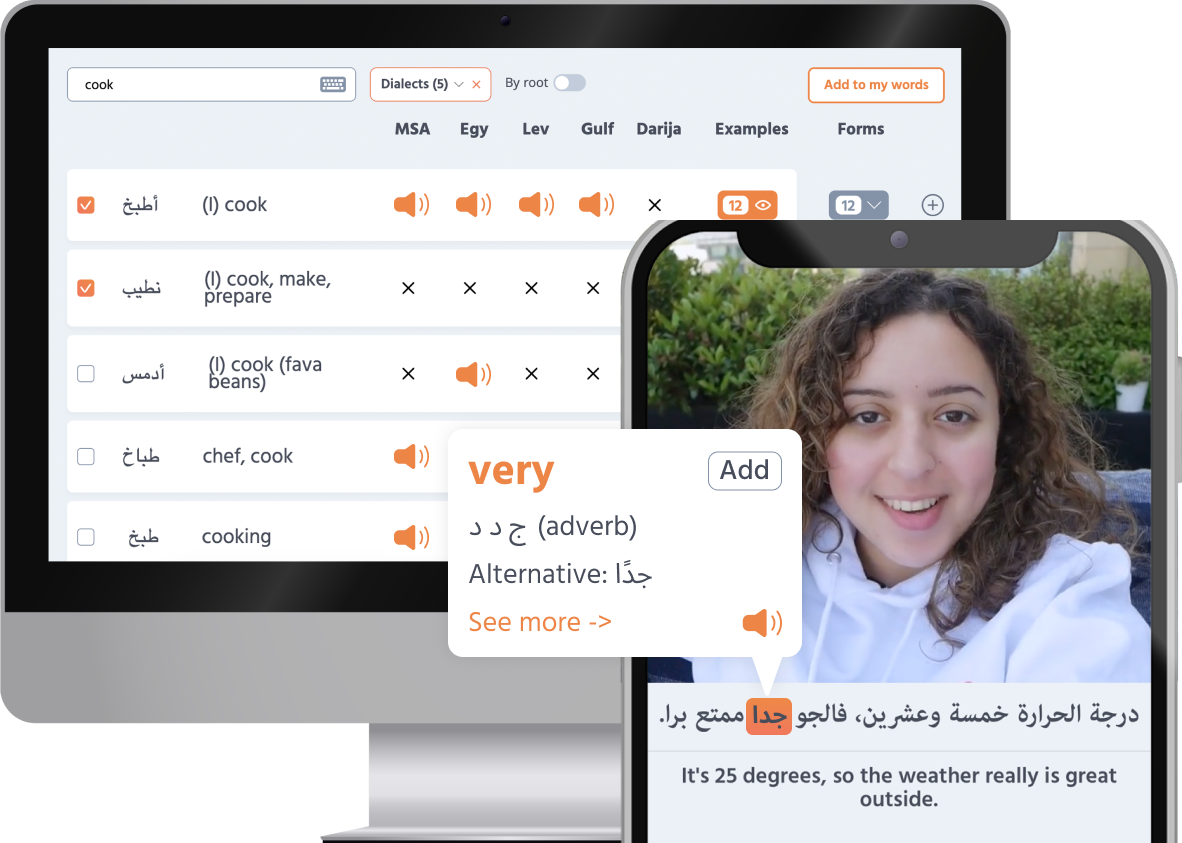
Get free Arabic videos with interactive captions for your level
Get free videos
Giving permission or approval تفضل
can also be used to grant permission or approve an action.
Someone asks if they can sit down, so you say:
A colleague asks to start speaking, so you say:
Polite encouragement Sometimes تفضل
is used to gently encourage someone, without pressure.
Someone hesitates before starting, so someone else says:
Formality in MSA When تفضل
is used in Modern Standard Arabic, it usually appears in broadcast or scripted speech , such as news programs, TV shows, or prepared public discourse, not in everyday conversation.
A TV host addresses a guest, saying:
A presenter invites someone to respond by saying:
This clip is from Al-Manahil , an educational and cultural program in Modern Standard Arabic. تفضل؟
as “How Can I Help You?”In spoken Arabic, especially in Levantine and Egyptian contexts, تفضل؟
is often used to invite speech rather than action.
A receptionist looks up at you and says:
A shopkeeper turns toward a customer and says:
This use doesn’t offer something, it opens the floor.
Closing note تفضل
isn’t just a polite word. It’s a social gesture.
It reflects the rhythm of Arabic polite expressions in real conversations, where tone and context matter more than literal meaning.
Listen for تفضل
in real Arabic conversations on Playaling real-world videos make it easy to hear how tone and context shape everyday Arabic.