In the Arab World, there are countless ways to greet someone, whether it’s through words, gestures, or even sounds. Today we are going to discover lots of Arabic greetings, many of which have way different meanings than their literal ones,😅معلش

(Mostly) Muslim ways of greeting someone
Maybe you’ve already heard of السّلام عليكم
? It literally means “peace be upon you” and is perhaps the most famous way of greeting someone in Arabic. It’s also the traditional Muslim way, and is usually followed by the reply وعليكم السّلام
(literally: and peace be on you).
In colloquial speech, the greeting may be contracted further to just سَلَام
(literally: peace), which doesn’t have the same Muslim undertone. In more formal contexts, or when speaking to elders, the greeting may be expanded to the following:
السلام عليكم ورحمة الله وبركاته
(Literally: May the peace, blessings, and mercy of God be upon you)
And its response:
وعليكم السلام ورحمة الله وبركاته
(Literally: And may the peace, blessings, and mercy of God be upon you)
Check out this video showing an Egyptian using the extended version.
In Islamic tradition, this greeting traces back to Adam, the first human. Allah instructed Adam to greet assembled angels, who responded with “Peace be upon you and the mercy of Allah,” thus establishing the greeting for Adam’s progeny. Prophet Muhammad emphasized spreading peace among believers as a means to foster love and unity.
The Quran reinforces this practice, instructing believers to greet each other with peace upon entering houses. The phrase السّلام عليكم
appears seven times, emphasizing its significance. Various Quranic verses underscore the importance of peace and its rewards in the afterlife.
But the tradition of using just سلَام
as an Arabic greeting predates Islam, with its roots extending back thousands of years. Similarities exist in older Semitic languages, such as Aramaic’s “šlāmā ʿalḵōn” (ܫܠܵܡܵܐ ܥܲܠܟ݂ܘܿܢ) and Hebrew’s “shalom aleichem” (שָׁלוֹם עֲלֵיכֶם shālôm ʻalêḵem).
Arab Christians rarely use السّلام عليكم
due to its Islamic religious connotations and it could elicit strange looks if used in Christian areas in Lebanon. Egyptian Christians are less stringent but usually opt for non-Islamic greetings instead.
Get free Arabic videos with interactive captions for your level
General greetings
Looking to greet someone in the name of peace, but without the Islamic connotation? Then just say سلام
. Today, سلام
is widely used by both Muslims and non-Muslims in colloquial Arabic. Check out more greetings in Standard Arabic and various dialects, including Egyptian, Levantine, Gulf, and Darija. 👇
| English | Standard | Egyptian | Levantine | Gulf | Darija |
| Hello | مرحبًا (marHaban)
|
أهلًا (ahlan)
| مرحبا (marHaba)
هلا (hala)
| مرحبا (marHaba)
مرحب (marHab)
| مرحبا (marHba)
|
| Good morning | صباح الخير (SabaaH al-khayr)
| صباح الخير (SabaaH il-kheir)
| صباح الخير (SabaaH il-kheir)
| صباح الخير (SabaaH il-kheir)
| صباح الخير (SbaaH l-kheir)
|
| Good evening | مساء الخير (masaa’ al-khayr)
| مساء الخير (masaa’ il-kheir)
| مسا الخير (masa l-kheir)
| مساء الخير (masaa’ il-kheir)
| مسا الخير (msa l-kheir)
|
Note:
Although أهلا
can be translated to “hello,” it cannot be used as a substitute for مرحبا
in Levantine, Gulf, and, Morroco, in these countries, أهلا
is only used in reply. For example, if you meet someone on the street, you can say مرحبا
(hello) and they can reply with أهلا
(hello), but you cannot start by saying أهلا
.
There is one situation, however, where you can begin by saying أهلا
, and that is when people visit you at your home. When you open the door for them, you can say أهلا
or أهلا وسهلا
(hello and welcome).
How to respond to greetings?
The responses to each greeting are (by order):
| Standard | Egyptian | Levantine | Gulf | Darija |
أهلًا (ahlan)
أهلًا وسهلًا (ahlan wa-sahlan)
| أهلًا (ahlan)
أهلًا وسهلًا (ahlan wa-sahlan)
أهلًا بيك (ahlan biik)
يا مرحب (ya marHab)
| أهلًا (ahlan)
أهلًا وسهلًا (ahlan wa-sahlan)
أهلا (ahla)
أهلا وسهلا (ahla w-sahla)
أهلين (ahlein)
أهلين وسهلين (ahlein w-sahlein)
| هلا (hala)
أهلا وسهلا (ahlan wa-sahlan)
ياهلا (ya hala)
ياهلا ومرحب (ya hala w-marHab)
هلا وغلا (hala w-ghala)
هلا ومرحبا (hala w-marHaba)
| مرحبا (marHba)
مرحبا وألف مرحبا (marHba w-alf marHba)
أهلًا (ahlan)
|
| صباح النور (SabaaH an-nuur)
| صباح النور (SabaaH in-nuur)
| صباح النور (SabaaH in-nuur)
| صباح النور (SabaaH in-nuur)
| صباح النور (SbaaH n-nuur)
|
| مساء النور (masaa’ an-nuur)
| مساء النور (masaa’ in-nuur)
| مسا النور (masa n-nuur)
| مساء النور (masaa’ in-nuur)
| مسا النور (msa n-nuur)
|
Better off greeting people in colloquial Arabic, unless you want people looking at you a little weird and possibly laughing, or just switching to English.
Welcome people as a family!
ِIn both colloquial and standard Arabic, it’s very common and popular to say:
أهلًا
أهلًا وسهلًا
Two people greet eachother.
To learn more about welcoming phrases in Arabic dialects and everything related to Arab hospitality, read this article on Arab hospitality and generosity.
Romantic greetings
Feeling a bit romantic, super friendly, or just wanna get a little fancy? Try out one of these:
| English | Egyptian | Levantine | Gulf | Darija |
| Evening of roses | مساء الورد (masaa’ il-ward)
| مسا الورد (masa l-ward)
| مساء الورد (masaa’ il-ward)
| مسا الورد (msa l-ward)
|
| Evening of jasmine | مساء الفل (masaa’ il-full)
| مسا الفل (masa l-full)
| مساء الفل (masaa’ il-full)
| مسا الفل (msa l-full)
|
| Evening of jasmine and Arabian jasmine | مساء الفل والياسمين (masaa’ il-full wil-yasamiin)
| مسا الفل والياسمين (masa l-full wil-yasmiin)
| مساء الفل والياسمين (masaa’ il-fell wil-yasmiin)
| مسا الفل والياسمين (msa l-full w-l-yasmiin)
|
It’s like saying, “Tonight is not just an evening; it’s a blossoming paradise!” I mean, why stop at ‘good’ when you can have a garden party, complete with fragrant Arabian jasmine? You may hear Egyptians in particular using these a lot, usually with a bit of humor.
For the difference between jasmine and Arabian Jasmine, click here.
So sprinkle these greetings into your day to day encounters for an extra touch of cultural charm. Cheers to being the greeting guru! 🌙🌸
Greetings tips for lovebirds
If you’re feeling a bit flirtatious and want to add a touch of sweetness to your greetings, try slipping in the phrase على عيونك الحلوِين
or لَعيونك الحلوين
when addressing females, These expressions, are a charming way to elevate an ordinary greeting into a flirtatious masterpiece. In Arab culture, it’s more common for guys to flirt with girls than the other way around, making this phrase particularly popular among men aiming to impress. Whether it’s “Good morning” or “Good evening,” adding this phrase is like sprinkling a bit of romance onto your words. It’s not just a greeting anymore—it’s a subtle, playful gesture that says, I see you, and I’m making this moment just a little sweeter for you. So go ahead, give it a try, and turn your simple hellos into memorable, heartwarming exchanges! 😉
To a male:
- مسا الفل والياسمين على عيونك الحلوين
(Evening of jasmine for your beautiful eyes)
- مسا الورد لعيونك الحلوين
(Evening of roses for your beautiful eyes)
To a female:
- مسا الفل والياسمين على عيونك الحلوين
(Evening of jasmine for your beautiful eyes)
- مسا الورد لعيونك الحلوين
(Evening of roses for your beautiful eyes)

Love hack for the romantics
Alright, love aficionados, here’s a move smoother than a jazz sax solo: Swap your usual good morning for the fancier صباح الخير يا كل الخير
– aka (Good morning, my all good things)
It’s like upgrading your greeting game from a tricycle to a Ferrari. Instead of the regular good morning, you’re practically serenading them with, You’re my sunshine, my coffee, my WiFi – everything good about this morning.
So, when you’re in the mood for a touch of romance, drop this line. It’s the kind of move that says, I’m smooth, I’m polite, and I just elevated our morning to VIP status. You’re welcome. 😎✨
For how to show affection in Arabic, don’t miss: Arab Love: How to Show Affection in Arabic.
Nice to meet you
With the vast number of greetings for people every day, what are some special phrases we can say to those we meet for the first time? Common responses are marked with (s) for singular or (pl) for plural, (m) for masculine (used when the speaker or listener is male), and (f) for feminine (used when the speaker or listener is female).
In Standard Arabic
Click to view
| Standard | Literal meaning | Common responses | Literal meaning |
| تشرّفنا (tasharrafnaa)
| We were honored | (s) الشرف لي (ash-sharaf lii)
(pl) الشرف لنا (ash-sharaf lanaa)
| The honor is mine
The honor is ours |
| فرصة سعيدة (furSa sa’iida)
| Happy opportunity | فرصة سعيدة (furSa sa’iida)
| Happy opportunity
I’m happier |
| أهلًا (ahlan)
| Among family | (m) أهلًا بك (ahlan bika)
(f) أهلًا بك (ahlan biki)
(pl) أهلًا بكم (ahlan bikum)
| Among family |
| أهلًا وسهلًا (ahlan wa-sahlan)
| Among family and in the dwelled land | (m) أهلًا بك (ahlan bika)
(f) أهلًا بك (ahlan biki)
(pl) أهلًا بكم (ahlan bikum)
(m) أهلا وسهلًا بك (ahlan wa-sahlan bika)
(f) أهلًا وسهلًا بك (ahlan wa-sahlan biki)
(pl) أهلًا وسهلًا بكم (ahlan wa-sahlan bikum)
| (You) Among family and in the dwelled land |
In Egyptian
Click to view
| Egyptian | Literal meaning | Common responses | Literal meaning |
| اتشرّفنا (itsharrafna)
| We were honored | الشرف ليّا (ish-sharaf liyya)
(m) حبيبي الشرف ليّا (Habiibi ish-sharaf liyya)
(f) حبيبتي الشرف ليّا (Habibti ish-sharaf liyya)
(s) أنا أكتر (ana aktar)
(pl) احنا أكتر (iHna aktar)
| The honor is mine
My dear, the honor is mine
Me more
Us more |
| فرصة سعيدة (furSa sa’iida)
| Happy opportunity | فرصة سعيدة (furSa sa’iida)
أنا أسعد (ana as’ad)
| Happy opportunity
I’m happier |
| أهلًا (ahlan)
| Among family
| (m) أهلًا بيك (ahlan biik)
(f) أهلًا بيكي (ahlan biiki)
(pl) أهلًا بيكم (ahlan biikum)
| (You) Among family |
Ahmed and Mona, two Egyptians, meet for the first time.
In Levantine
Click to view
| Levantine | Literal meaning | Common responses | Literal meaning |
| تشرّفنا (tsharrafna)
| We were honored | (s) أنا بالأكتر (ana bil-aktar)
(pl) نحنا بالأكتر (niHna bil-aktar)
| Me more
Us more |
(m) تشرّفنا بمعرفتك (tsharrafna b-ma’riftak)
(f) تشرّفنا بمعرفتك (tsharrafna b-ma’riftik)
| We were honored to know you | (s) الشرف إلي (ish-sharaf ili)
(pl) الشرف إلنا (ish-sharaf ilna)
| The honor is mine
The honor is ours |
| متشرفين (mitsharrfiin)
| We are honored | نحنا بالأكتر (niHna bil-aktar)
| Us more |
| فرصة سعيدة (furSa sa’iide)
| Happy opportunity | فرصة سعيدة (furSa sa’iide)
أنا أسعد (ana as’ad)
| Happy opportunity
I’m happier |
| أهلًا (ahlan)
| Among family | (m) أهلًا فيك (ahlan fiik)
(f) أهلًا فيكي (ahlan fiiki)
(pl) أهلًا فيكوا (ahlan fiiku)
| Among family |
| أهلًا وسهلًا (ahlan wa-sahlan)
| Among family and in the dwelled land
| (m) أهلًا وسهلًا فيك (ahlan wa-sahlan fiik)
(f) أهلًا وسهلًا فيكي (ahlan wa-sahlan fiiki)
(pl) أهلًا وسهلًا فيكوا (ahlan wa-sahlan fiiku)
| Among family and in the dwelled land
|
In Gulf
In Gulf Arabic, the second-person feminine suffix -ك is sometimes pronounced as -تش
and other times as -كي
. Both pronunciations are correct and reflect regional variations within Gulf Arabic.
Click to view
| Gulf | Literal meaning | Common responses | Literal meaning |
| اتشرّفنا (itsharrafna)
| We were honored | الشرف لنا (ish-sharaf lana)
| The honor is ours |
| فرصة سعيدة (furSa sa’iida)
| Happy opportunity | فرصة سعيدة (furSa sa’iida)
أنا أسعد (ana as’ad)
| Happy opportunity
I’m happier |
| أهلًا (ahlan)
| Among family | (m) أهلًا فيك (ahlan fiik)
(f) أهلًا فيكي (ahlan fiiki)
(pl) أهلًا فيكم (ahlan fiikum)
| Among family |
| هلا (hala)
| Among family | (m) هلا فيك (hala fiik)
(f) هلا فيك (hala fiich)
(pl) هلا فيكم (hala fiikum)
| Among family |
| أهلين (ahlein)
| Two أهلًا (ahlan)
(among family) | (m) أهلين فيك (ahlein fiik)
(f) أهلين فيكي (ahlein fiiki)
(pl) أهلين فيكم (ahlein fiikum)
| Two أهلًا (ahlan)
(among family) |
| أهلًا وسهلًا (ahlan wa-sahlan)
| Among family and in the dwelled land
| (m) أهلًا وسهلًا فيك (ahlan wa-sahlan fiik)
(f) أهلًا وسهلًا فيك (ahlan wa-sahlan fiich)
(pl) أهلًا وسهلًا فيكم (ahlan wa-sahlan fiikum)
| Among family and in the dwelled land |
In Darija
Click to view
| Darija | Literal meaning | Common responses | Literal meaning |
متشرفين (mtsharrfiin)
| We are honored | الله يبارك فيك (allaah ybaarek fiik)
الله يخليك (allaah ykhalliik)
| God bless you!
May God keep you
|
أهلًا (ahlan)
| Among family | شكرًا (shukran)
ربي يخليك (rabbi ykhalliik)
ترحب بيك الجنة (traHHab biik j-jenna)
| Thank you
May God keep you
May the heaven welcome you |
Long time no see
In Standard Arabic
Click to view
| Standard | Literal meaning | Common responses | Literal meaning |
لم أرك منذ مدّة
(m) طويلة (lam araka mundhu mudda Tawiila)
لم أرك منذ مدّة
(f) طويلة (lam araki mundhu mudda Tawiila)
| Long time no see | (m) كنت مشغولًا (kuntu mashghuulan)
(f) كنت مشغولة (kuntu mashghuula)
| I was busy |
| ما كل هذا الغياب (maa kullu haadhaa l-ghiyaab)
| What about all this absence | في العمل (fii l-‘amal)
في مشاغل الحياة (fii mashaaghil al-Hayaat)
| At work
In the busyness of life |
(m) أين كنت؟ (ayna kunta?)
(f) أين كنت؟ (ayna kunti?)
| Where have you been? | (m) كنت مشغولًا (kuntu mashghuulan)
(f) كنت مشغولة (kuntu mashghuula)
(m) كنت مريضًا (kuntu mariiDan)
(f) كنت مريضة (kuntu mariiDa)
| I was busy
I was sick |
In Egyptian
Click to view
| Egyptian | Literal meaning | Common responses | Literal meaning |
(m) فينك؟ (fiinak?)
(f) فينك؟ (fiinik?)
| Where are you? | (m) مشغول (mashghuul)
(f) مشغولة (mashghuula)
| Busy |
(m) فينك من زمان؟ (fiinak min zamaan?)
(f) فينك من زمان؟ (fiinik min zamaan?)
| Where have you been? | ظروف، معلش (Zuruuf, ma’lish)
| Excuse me, I had circumstances |
| إيه الغيبة دي (eih il-ghiiba di)
| What is this absence | مشاغل الحياة (mashaaghil il-Hayaah)
| The busyness of life |
In Levantine
Click to view
| Levantine | Literal meaning | Common responses | Literal meaning |
| وين هالغيبة؟ (wein hal-gheibe?)
| Where is this absence? | بالشغل (bish-shughl)
بالدنيا (bid-dinya)
| At work
In the life |
(m) وينك؟ (weinak?)
(f) وينك؟ (weinik?)
| Where are you? | (m) موجود (mawjuud)
(f) موجودة (mawjuude)
بهالحياة (b-hal-Haya)
| Exist
In this life |
(m) وين ماعم نشوفك؟ (wein ma ‘am nshuufak?)
(f) وين ماعم نشوفك؟ (wein ma ‘am nshuufik?)
| Why haven’t we seen you? | ظروف (Zruuf)
(m) مشغول (mashghuul)
(f) مشغولة (mashghuule)
| Circumstances
Busy |
(m) عاش مين شافك (‘aash miin shaafak)
(f) عاش مين شافك (‘aash miin shaafik)
| Alive (blessed) is the one who saw you! | (m) الله يسلمك (allaah ysallmak)
(f) الله يسلمك (allaah ysallmik)
(m) تسلم (tislam)
(f) تسلمي (tislami)
| May God keep you well & safe
May you be well/safe |
(m) وين أيامك؟ (wein ayyaamak?)
(f) وين أيامك؟ (wein ayyaamik?)
| Where are your days? | بهالدنيا (b-had-dinya)
بالشغل (bish-shughl)
بالدراسة (bid-diraase)
| In this life
At work
Studying |
(m) وين أراضيك؟ (wein araaDiik?)
(f) وين أراضيكي؟ (wein araaDiiki?)
| Where are your lands? | هون (hon)
(m) موجود (mawjuud)
(f) موجودة (mawjuude)
| Here
Exist |
| !من زمان والله (min zamaan wallaah!)
| Ages ago, I swear! | اي والله (ei wallaah)
| Yes, I swear |
| من زمان هالقمر ما بان (min zamaan hal-‘amar ma baan)
| The moon hasn’t appeared in a long time! | (m) تسلم (tislam)
(f) تسلمي (tislami)
| May you be well/safe |
(m) وشك ولا ضو القمر؟ (wishshak walla Daww il-‘amar?)
(f) وشك ولا ضو القمر؟ (wishshik walla Daww il-‘amar?)
| Is that your face or the moon’s light? | شكرًا (shukran)
(m) الله يسلمك (allaah ysallmak)
(f) الله يسلمك (allaah ysallmik)
| Thanks
May God keep you well & safe |
In Gulf
Click to view
| Gulf | Literal meaning | Common responses | Literal meaning |
(m) وينك؟ (weinak?)
(f) وينك؟ (weinik?)
| Where are you? | مشغول (mashghuul)
مشغولة (mashghuula)
| Busy |
(m) وين غايب؟ (wein ghaayib?)
(f) وين غايبة؟ (wein ghaayba?)
| Where are you absent? | في الشغل (fi sh-shughl)
| At work |
(m) عاش من شافك (‘aash man shaafak)
(f) عاش من شافك (‘aash man shaafich)
| Alive is the one who saw you! | عشت الله يسلمك (‘isht allaah ysallmak)
عشتي الله يسلمك (‘ishti allaah ysallmich)
| You lived may God keep you well & safe |
(m) والله زمان ما شفناك (wallaah zamaan ma shifnaak)
(f) والله زمان ما شفناك (wallaah zamaan ma shifnaach)
| Long time no see | والله مشاغل الحياة (wallaah mashaaghil il-Hayaa)
| In the busyness of life, I swear |
In Darija
Click to view
| Darija | Literal meaning | Common responses | Literal meaning |
| اغبرتي (ghbarti)
| You’ve disappeared | غير مع الدنيا وصافي (ghir m’a d-dunya w-Saafi)
| Just with the life |
| شحال ما شفناك (shHaal ma shefnaak)
| How long has it been since we saw you? | كنجريو فهاد الدنيا (kanjriw f-had d-dunya)
| I’m hustling in this world |
| غبور هادي (ghbuur haadi)
| You have been absent for a while | (m) كنت مشغول (kunt mashghuul)
(f) كنت مشغولة (kunt mashghuula)
| I was busy |
| شحال ما تلاقينا (shHaal ma tlaaqiina)
| How long has it been since we met? | هانتا كتشوف مكنتش
(m) مسالي (haanta katshuuf makuntsh msaali)
هانتي كتشوفي مكنتش
(f) مسالي (haanti katshuufi makuntsh msaalya) | You haven’t asked about me |
| غبورات (ghbuuraat)
| You have been absent | غير مع الدنيا وصافي (ghir m’a d-dunya w-Saafi)
| Just with the life |
How are you?
The table below lists the most common phrases used to ask about someone’s well-being in various Arabic dialects. However, there are certainly other expressions that serve the same purpose. For more examples, check out this article: Ten ways to say “how are you?” in Levantine Arabic.
| How are you? | Common responses | Meaning |
| Standard Arabic | كيف الحال؟ (kayfa l-Haal?)
| بخير (bi-khayr)
| Well, fine |
| Levantine | (m) كيفك؟ (kiifak?)
(f) كيفك؟ (kiifik?)
| (m) منيح (mniiH)
(f) منيحة (mniiHa)
تمام (tamaam)
الحمدلله (il-Hamdillaah)
| well
Fine
Thank God |
| Egyptian | (m) إزيك؟ (izzayyak?)
(f) إزيك؟ (izzayyik?)
| (m) كويّس (kwayyis)
(f) كويسة (kwayyisa)
تمام (tamaam)
الحمدلله (il-Hamdillaah)
| well
Fine
Thank God |
| Gulf | (m) كيف حالك؟ (kiif Haalak?)
(f) كيف حالك؟ (kiif Haalich?)
| (m) كويّس (kwayyis)
(f) كويسة (kwayyisa)
تمام (tamaam)
الحمدلله (il-Hamdillaah)
| well
Fine
Thank God |
| Darija | (m) كي داير؟ (kii daayer?)
(f) كي دايرة؟ (kii daayra?)
| بخير (b-khiir)
زين (ziin)
الحمدلله (l-Hamdulillaah)
| well
Fine
Thank God |
Goodbye in Arabic
| English | Standard | Egyptian | Levantine | Gulf | Darija |
| Peace be upon you | السلام عليكم (as-salaamu ‘alaykum)
| السلام عليكم (is-salaamu ‘aleikum)
| السلام عليكم (is-salaamu ‘aleikum)
| السلام عليكم (is-salaamu ‘aleikum)
| السلام عليكم (s-salaamu ‘aleikum)
|
| Literally: with soundness, safety | مع السلامة (ma’a s-salaama)
| مع السلامة (ma’a s-salaama)
| مع السلامة (ma’ is-salaame)
| مع السلامة (ma’a s-salaama)
| مع السلامة (m’a s-salaama)
|
| Until we meet again | إلى اللقاء (ilaa l-liqaa’)
| (m) أشوفك على خير (ashuufak ‘ala kheir)
(f) أشوفك على خير (ashuufik ‘ala kheir)
| (m) بشوفك (bshuufak)
(f) بشوفك (bshuufik)
| (m) أشوفك بعدين (ashuufak ba’dein)
(f) أشوفك بعدين (ashuufich ba’dein)
| نتلاقاو من بعد (ntlaaqaw men ba’d)
من بعد نتشاوفو (men ba’d ntshaawfu)
|
| Bye-bye | X | باي باي (baay baay)
| باي باي (baay baay)
| X | باي باي (baay baay)
|
Responses to these phrases are usually made by repeating the same phrase. For example, if someone says بشوفك
(see you), you reply with بشوفك
and if they say باي
“Bye,” you reply with باي
“Bye.” As for السلام عليكم
the response can either be السلام عليكم
or وعليكم السلام
When someone says مع السلامة
(goodbye), the response is typically الله يسلمَك
for males or الله يسلمِك
for females.
Oh, and by the way…
If learning Arabic at your own pace, with fun, real-world videos sounds like your style, then Playaling could be exactly what you’re looking for!
With Playaling, you’ll dive into any major Arabic dialect or MSA. Our diverse range of videos has it all—from everyday conversations and cultural moments to music videos, TV and movie clips, influencer content, news broadcasts, and inspiring talks.
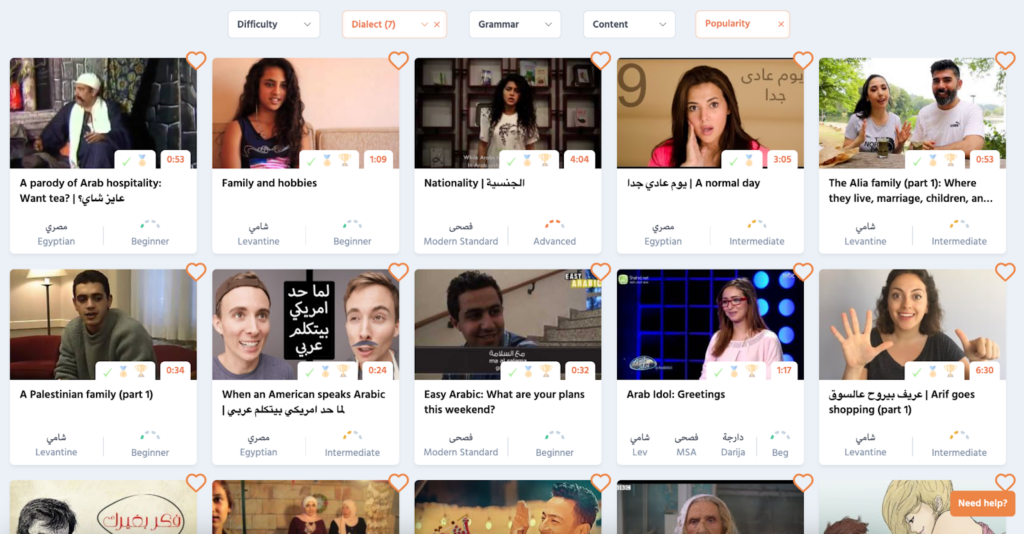
Our interactive captions let you tap any word for instant translations, context, and audio. So, real Arabic content becomes accessible with just a click. Miss something? No problem—rewind and listen as often as you need, or hover over subtitles for quick definitions.

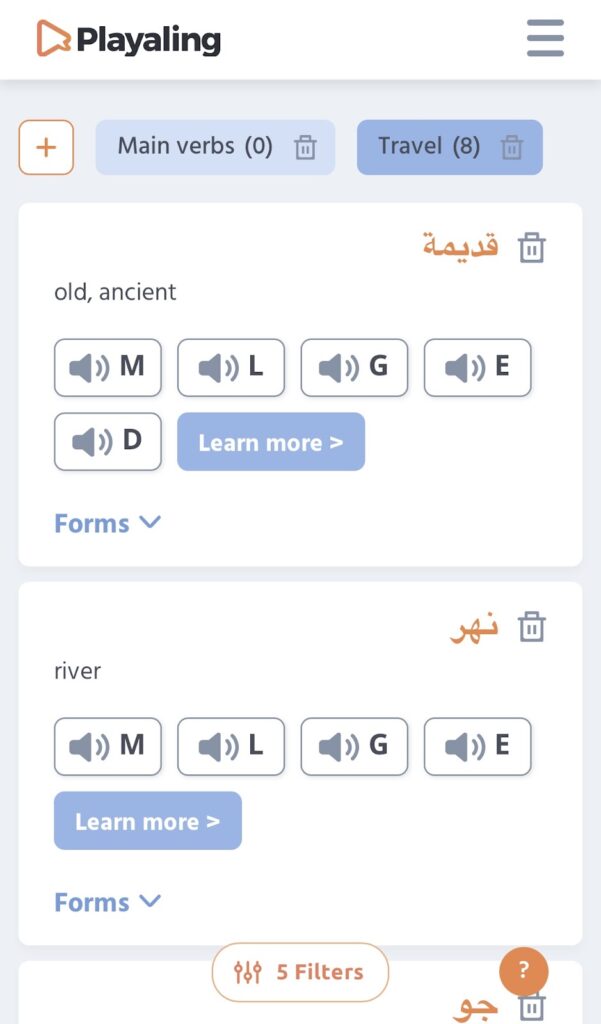
Spot a word you want to learn? Save it to your personalized word set, or dive into curated sets for focused practice and easy review.
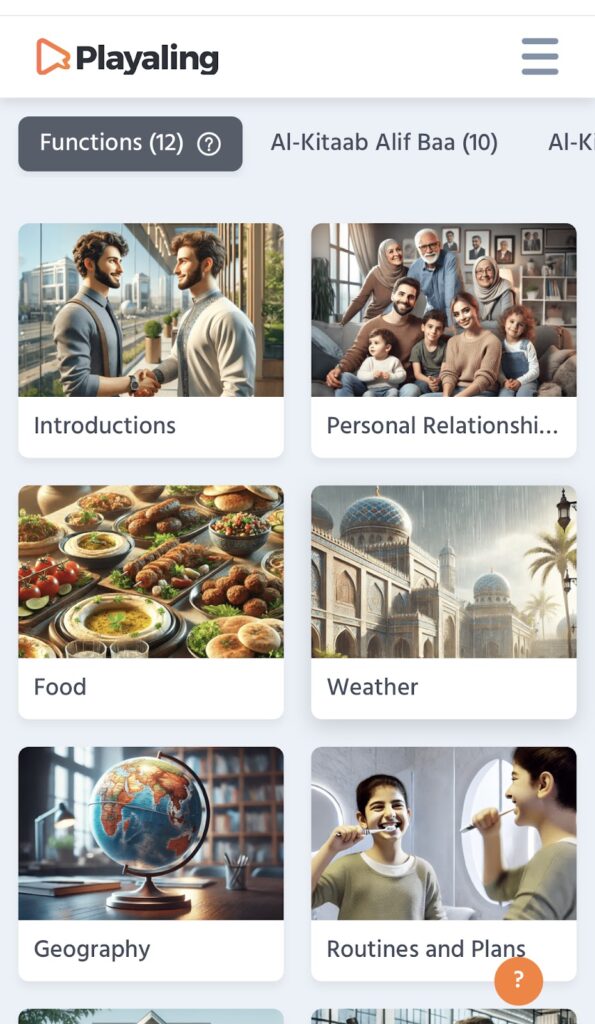
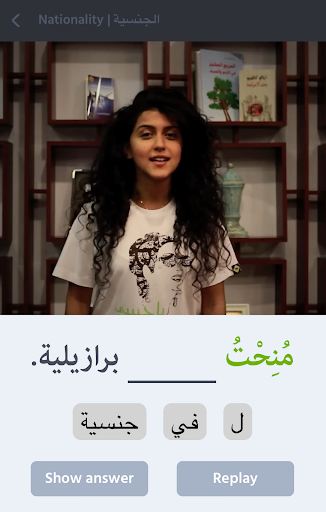
Interactive exercises let you dive in and practice what you’ve learned.
Need to look something up? The Audio Dictionary has you covered with clear human pronunciations and real world examples.

It’s a learning experience that keeps you engaged, bringing authentic, real-world Arabic closer to you every step of the way.
Give it a try!