When learning Arabic, understanding how to use nouns is essential. Nouns are fundamental elements of language, representing people, places, things, and ideas. This article provides a comprehensive guide on nouns in Arabic in both Standard and colloquial Arabic (including Levantine, Egyptian, Gulf, and Darija). By exploring key aspects of Arabic nouns, you’ll be able to use them in everyday conversation.
Why’s it important to know the gender of nouns in Arabic?
If you’ve ever studied a romance language (such as French or Spanish), you probably know how important it is to know the gender of individual nouns. It’s the same in Arabic. In order to speak correctly, noun gender affects the words used to modify and refer back to that specific noun. For example, you’d never say البنت جميل
but rather البنت جميلة
(the girl is beautiful). That’s because بنت
(girl) is feminine, and so it needs a feminine adjective جميلة
(beautiful) to modify it. Likewise, you’d never say الولد جميلة
but rather الولد جميل
(the boy is beautiful). Since ولد
(boy) is masculine, we must use the masculine form for “beautiful” (جميل)
. The gender also affects which pronouns we use and how we conjugate verbs.
Get free Arabic videos with interactive captions for your level
How do you know the gender of nouns in Arabic?
In Arabic, like in the romance languages, all nouns are either masculine or feminine. But don’t worry, you don’t need to memorize which one’s which. Fortunately, there are useful shortcuts to correctly guess the gender of over 99% of the Arabic nouns out there.
General rules
- Natural gender: Some words are masculine or feminine by nature. Think back to بنت (girl) and ولد (boy) cited before. The former is feminine and the latter is masculine by nature, the same as in English.
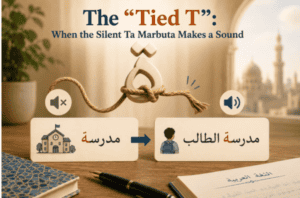
- The most common and important predictor of whether a noun is feminine or masculine is whether or not it ends in ـة
. If it ends in ـة , it’s generally feminine. If it doesn’t end in ـة , in generally masculine. For example, كنبة
(couch) is feminine but كرسي
(chair) is masculine. If you just remember this rule and none other, you’ll be able to modify and conjugate over 90% of Arabic nouns correctly!
- Words that end in ـى
and ـاء
are also feminine, like صحراء
(desert), سماء
(sky), ذكرى
(memory), بشرى
(good news).
- In colloquial Arabic, the ء
often drops, so you get صحرا
(desert) and سما
(sky), so, in that case, you can just look or listen for the ا
, which incidentally makes the same sound as ـة. So it shouldn’t be hard to remember at all.
- There are some exceptions to the above rules and they are as follows:
- Countries and city names are usually feminine, such as مصر
(Egypt), أمريكا
(America), تونس
(Tunisia), البرازيل
(Brazil), القاهرة
(Cairo), واشنطن
(Washington), though with some exceptions: العراق
(Iraq), لبنان
(Lebanon), المغرب
(Morocco), السودان
(Sudan), الرباط
(Rabat), الخرطوم
(Khartoum), بغداد
(Baghdad), بيروت
(Beirut), القدس
(Jerusalem).
- Body parts that come in pairs are usually feminine nouns in Arabic despite not having the above-mentioned suffixes, such as عين
(Eye), خد
(cheek), يد
(Hand) in Standard Arabic and Darija or إيد
in other dialects.
- Some elements of nature are feminine nouns despite not having the above-mentioned suffixes: شمس
(Sun), ريح
(Wind), نار
(Fire), أرض
(Earth).
- Thankfully, only a very small number of nouns are considered feminine without any explanation. In addition to the elements of nature listed above, there’s also حرب
(War), دار
(House), نفس
(Soul), كأس
(Cup).
Examples of masculine and feminine nouns
| English | Standard Arabic | Levantine | Egyptian | Gulf | Darija | Classification |
| Car | سيّارة
| سيّارة
| عربيّة
| سيّارة
| سيّارة
| Feminine (ends is ـة) |
| Amman | عمّان
| عمّان
| عمّان
| عمّان
| عمّان
| Feminine (country capital) |
| Woman | امرأة
| مرا
| ست
| مرا
| مرا
| Feminine (by nature) |
| Daughter | بنت
| بنت
| بنت
| بنت
| بنت
| Feminine (by nature) |
| hand | يد
| إيد
| إيد
| يد
| يد
| Feminine (body part in pairs) |
| Leg | رجل
| رجل
| رجل
| رجل
| رجل
| Feminine (body part in pairs) |
| Man | رجل
| رجّال
| راجل
| رجّال
| راجل
| Masculine by nature |
| Boy | ولد
| ولد
| ولد
| ولد
| ولد
| Masculine by nature |
| Book | كتاب
| كتاب
| كتاب
| كتاب
| كتاب
| Masculine (doesn’t end in ـة) |
| Pen | قلم
| قلم
| قلم
| قلم
| قلم
| Masculine (doesn’t end in ـة) |
| Preacher | داعية
| داعية
| داعية
| داعية
| داعية
| Masculine (by nature – think stereotypes) |
| Hamza (given name for males) | حمزة
| حمزة
| حمزة
| حمزة
| حمزة
| Masculine (by nature) |
| Osama (given name for males) | أسامة
| أسامة
| أسامة
| أسامة
| أسامة
| Masculine (by nature) |
| Key | مفتاح
| مفتاح
| مفتاح
| مفتاح
| مفتاح
| Masculine (doesn’t end in ـة) |
| Ring | خاتم
| خاتم
| خاتم
| خاتم
| خاتم
| Masculine (doesn’t end in ـة) |
Professions commonly practiced by both men and women are masculine when performed by a man, and become feminine when performed by a woman by adding ـة to the end.
Teacher مدرس
(m) / مدرسة
(f)
Artist فنان
(m) / فنانة
(f)
Accountant محاسب
(m) / محاسبة
(f)
Engineer مهندس
(m) / مهندسة
(f)
Singular, dual, and plural nouns in Arabic
Nouns in Arabic can be singular, dual, or plural. Singular nouns refer to one entity, dual nouns refer to two, and plural nouns refer to three or more. While the dual form is less common in colloquial Arabic and often replaced with the plural form, it’s still useful to recognize.
Regular plural nouns
For the majority of English nouns, if we’re talking about more than one of something, we simply add “s” to the end of the word. But there are exceptions, like child/children. It’s very similar in Arabic: for many nouns, you can get the plural form by adding the suffix ين
if the noun is masculine (in Arabic dialects) and by adding the suffix ين
or ون
(in Standard Arabic), or ات
if the noun is feminine. For example:
| English | Standard | Levantine | Egyptian | Gulf | Darija |
| Teacher (m) | مدرّس
معلّم
| مدرّس
معلّم
| مدرّس
| مدرّس
معلّم
| معلّم
|
| Teachers (m) | مدرّسين
مدرّسون
معلّمين
معلّمون
| مدرّسين
معلّمين
| مدرّسين
| مدرّسين
معلّمين
|
معلّمين
|
| Teacher (f) | مدرّسة
معلّمة
| مدرّسة
معلّمة
| مدرّسة
| مدرّسة
معلّمة
| معلّمة
|
| Teachers (f) | مدرّسات
معلّمات
| مدرّسات
معلّمات
| مدرّسات
| مدرّسات
معلّمات
| معلّمات
|
Broken Plurals
However, for many Arabic nouns, you get the plural form by rearranging the word’s letters and/or adding some vowels. For example:
| English | Standard | Levantine | Egyptian | Gulf | Darija |
| Man | رجل
| رجّال
| راجل
| رجّال
| راجل
|
| Men | رجال
| رجال
| رجالة
| رجال
| رجال
|
| Dog | كلب
| كلب
| كلب
| كلب
| كلب
|
| Dogs | كلاب
| كلاب
| كلاب
| كلاب
| كلاب
|
| Girl | بنت
| بنت
| بنت
| بنت
| بنت
|
| Girls | بنات
| بنات
| بنات
| بنات
| بنات
|
| Young man | شاب
| شب
| شاب
| شاب
| شاب
|
| Young men | شباب
| شباب
| شباب
| شباب
| شباب
|
This form of plural is known as broken plurals since they don’t follow the usual rule.Dual form
To form the dual of a noun in Arabic dialects, you typically add the suffix ين
to the end of the noun. In Moroccan Darija, the word جوج
is placed before the plural form to indicate the dual. In Standard Arabic, the dual is marked by adding either ين
or ان
depending on the case. For feminine nouns that end in ـة, the ة is changed to ت before attaching the ين
suffix.
| English | Standard | Levantine | Egyptian | Gulf | Darija |
| A sentence | جملة
| جملة
| جملة
| جملة
| جملة
|
| Two sentences | جملتين
جملتان
| جملتين
| جملتين
| جملتين
| جوج جمل
|
| A pen | قلم
| قلم
| قلم
| قلم
| قلم
|
| Two pens | قلمين
قلمان
| قلمين
| قلمين
| قلمين
| جوج أقلام
|
Pluralization of nouns ending in ي in Arabic dialects
For nouns that end with the letter ي, the plural is often formed by adding the suffix ـة. This rule is more commonly observed in Arabic dialects than in Standard Arabic. In the table below, the non-bolded words indicate that the noun, in the specified dialect, does not follow this particular rule.
| English | Standard | Levantine | Egyptian | Gulf | Darija |
| Thief | لص
| حرامي
| حرامي
| حرامي
| سراق
شفّار
|
| Thieves | لصوص
| حرامية
| حرامية
| حرامية
| سراق
شفارة
|
| Gardener | بستانيّ
| جنايني
جنيناتي
| جنايني
| مزارع
| جارديني
|
| Gardeners | بستانيّون
بستانيّين
| جناينية
جنيناتية
| جناينية
| مزارعين
| جاردينية
|
| Thug | بلطجي
| بلطجي
| بلطجي
| X | مشرمل
|
| Thugs | بلطجية
| بلطجية
| بلطجية
| X | مشرملين
|
Referring to pairs of items
Unlike English, Arabic often uses singular forms when referring to common pairs, as shown in the table below. The non-bolded words indicate that the term in the specified dialect does not follow this rule.
| English | Standard | Levantine | Egyptian | Gulf | Darija |
| Shoes | حذاء
| حذاء
كندرة
| جزمة
| جوتي
جزمة
| صبّاط
|
| Socks | جورب
| جراب
| شراب
| شراب
| تقاشر
|
| Gloves | قفاز
| كفوف
| جوانتي
| قفاز
| ليكات
وانطيس
|
| Earrings | أقراط
| حلق
| حلق
| حلق
| حوالق
حلاقات
|
Referring to single items in a pair
To refer to a single item in a pair, Levantine and Egyptian use فردة
and Darija uses واحد
. Standard and Gulf Arabic don’t use this construction:
| English | Levantine | Egyptian | Darija |
| One shoe | فردة حذاء
فردة كندرة
| فردة جزمة
| فردة صبّاط
|
| One sock | فردة جراب
| فردة شراب
| واحد تقشيرة
|
| One earring | فردة حلق
| فردة حلق
| واحد حلاقة
|
Definite and indefinite nouns in Arabic
In Arabic, nouns can be definite or indefinite. Definite nouns refer to specific items, while indefinite nouns refer to general items. Definite nouns are often marked by the article ال
similar to (the) in English. Arabic doesn’t have an equivalent for “a” or “an”.
- Indefinite: كتاب
(a book)
- Definite: الكتاب
(the book)
Compound nouns in Arabic
In Arabic, compound nouns are created by combining two nouns, where one noun describes or specifies the other. This structure is often used to convey more specific meanings by linking two related concepts.
For example:
| English | Standard | Levantine | Egyptian | Gulf | Darija |
| Train station | محطة قطار
| محطة قطار
| محطة قطر
| محطة قطار
| محطة التران
|
| Bus stop | موقف باص
| موقف باص
| موقف اتوبيس
| محطة الباص
| محطة الكيران
|
| Paper bag | كيس ورقيّ
| كيس ورق
| شنطة ورق
| شنطة ورق
| قفة دالكرطون
|
Possessive forms in Arabic
Possession in Arabic is typically indicated by adding a suffix to the noun. Possessive forms vary depending on the person who owns the object.
For example:
| English | Standard | Levantine | Egyptian | Gulf | Darija |
| My book | كتابي
| كتابي
| كتابي
| كتابي
| كتابي
|
| Your (male) book | كتابك
| كتابك
| كتابك
| كتابك
| كتابك
|
| Your (female) book | كتابك
| كتابك
| كتابك
| كتابك
| كتابك
|
| His book | كتابه
| كتابو
| كتابو
| كتابه
| كتابو
|
| Her book | كتابها
| كتابها
كتابا
| كتابها
| كتابها
| كتابها
|
| Our book | كتابنا
| كتابنا
| كتابنا
| كتابنا
| كتابنا
|
| Their book | كتابهم
| كتابهون
كتابن
كتابهم
| كتابهم
| كتابهم
| كتابهم
|
Possessive words
Instead of using construction above, special words can get inserted instead to convey possession. For example, instead of كتابي
for “my book,” in Levantine Arabic you can say: الكتاب تبعي
. That’s sort of like the difference in English between saying “my book” and “the book belonging to me,” but Arabic uses the latter form a lot.
Let’s take another example, this time from Egyptian. For “Ahmed’s book,” instead of كتاب أحمد
you can say الكتاب بتاع أحمد
These same constructions apply to all major dialects of Arabic. Only the word indicating possession changes based on dialect, gender and number of the thing being possessed, as shown in this table:
| Levantine | Egyptian | Gulf | Darija |
| Masculine | تبع
| بتاع
| مال
| ديال
|
| Feminine | تبعت
تبعيت
| بتاعة
| مالت
| ديالت
|
| Plural | تبعون
تبعوت
| بتوع
| مالت
| دياول
|
Another word commonly used for indicating possession is ل
, which doesn’t change based on gender or number. This is used in MSA and all dialects. For example, “the book is mine.” becomes الكتاب لي
, and “the book is ours” becomes الكتاب لنا
, with the suffix adapting to the appropriate gender and number. In addition to, Levantine Arabic also uses إل
, which is the same thing as لaudiofile url=”https://api.playaling.com/upload/audio/938ff1b7bad6c4b01e732f56231bd437/msa.mp3?h=17280330364029″]. For example, “the book is mine.” becomes الكتاب إلي
. While all varieties of Arabic use ل
, only Levantine Arabic uses إل
.
Oh, and by the way…
If learning Arabic at your own pace, with fun, real-world videos sounds like your style, then Playaling could be exactly what you’re looking for!
With Playaling, you’ll dive into any major Arabic dialect or MSA. Our diverse range of videos has it all—from everyday conversations and cultural moments to music videos, TV and movie clips, influencer content, news broadcasts, and inspiring talks.
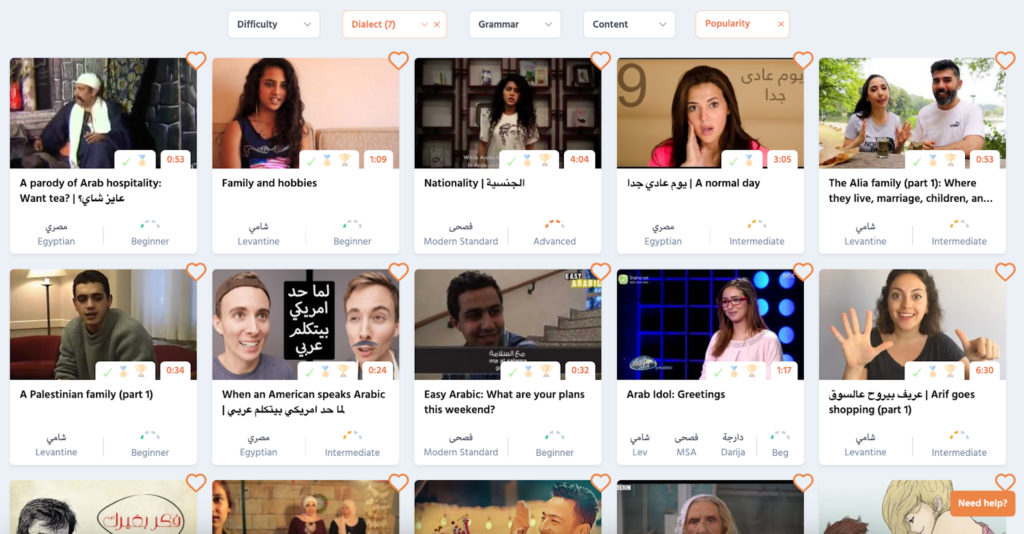
Our interactive captions let you tap any word for instant translations, context, and audio. So, real Arabic content becomes accessible with just a click. Miss something? No problem—rewind and listen as often as you need, or hover over subtitles for quick definitions.

Spot a word you want to learn? Save it to your personalized word set, or dive into curated sets for focused practice and easy review.
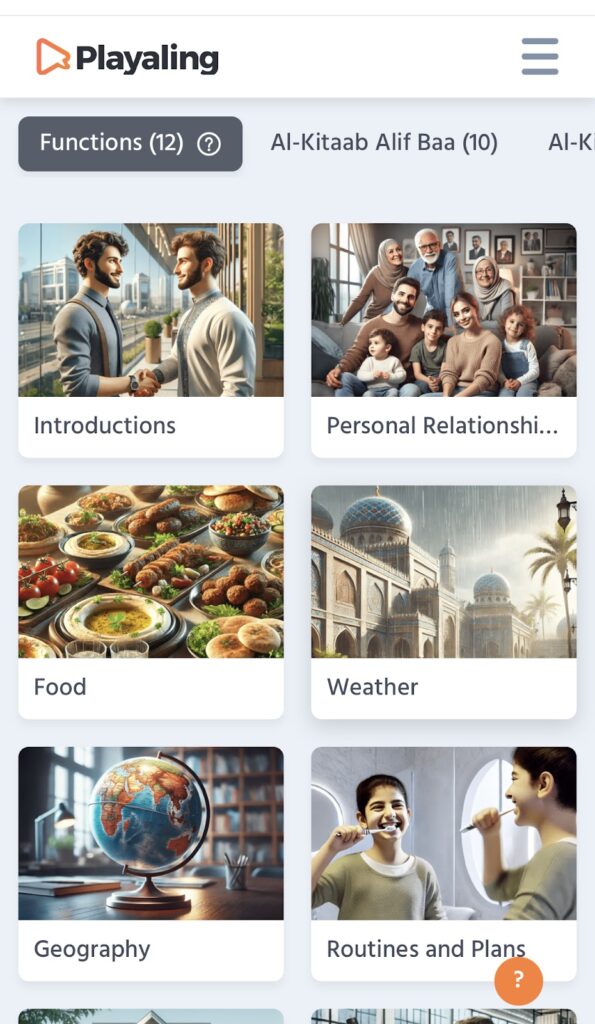
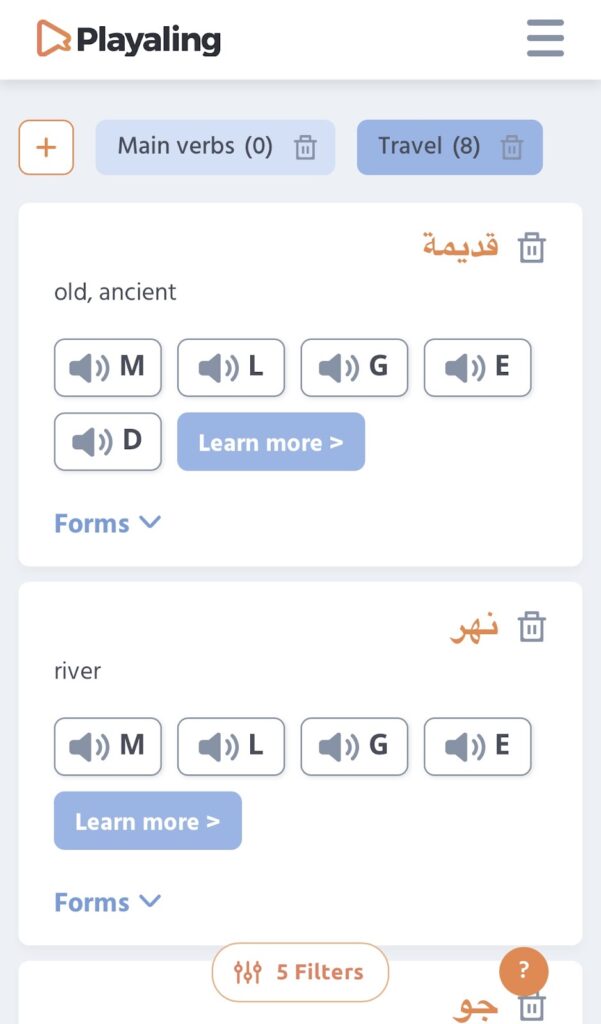
Interactive exercises let you dive in and practice what you’ve learned.
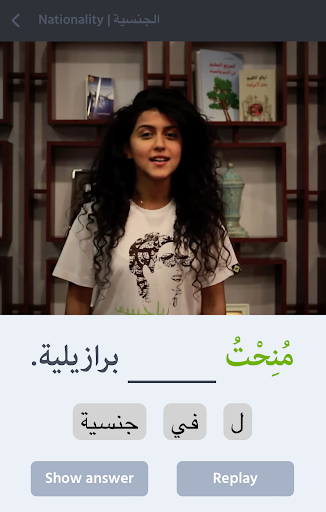
Need to look something up? The Audio Dictionary has you covered with clear human pronunciations and real world examples.

It’s a learning experience that keeps you engaged, bringing authentic, real-world Arabic closer to you every step of the way.
Give it a try!