Learning to read Arabic can be an exciting and rewarding journey. Whether you’re interested in enhancing your career opportunities, engaging with Arabic literature, or exploring the rich cultural heritage of the Arab world, mastering Arabic reading skills can open many doors. In this article, we’ll explore effective strategies on the best ways to learn to read Arabic efficiently, ensuring you make the most of your language learning journey.

Understand the Arabic alphabet
Kick things off by getting to know the Arabic alphabet. It’s a bit different from English because it’s written from right to left and each of the 28 letters can change shape depending on where they are in a word. There are some minor differences related to what variety of Arabic you are using as well, but not too many. Spend a bit of time with these characters—recognizing them quickly is your first big step toward fluency.
| Name | Initial | Medial | Final | Separate | Pronunciation |
| Alif
| ا | ـا | ـا | ا |
|
| Bā’
| بـ | ـبـ | ـب | ب |
|
| Tā’
| تـ | ـتـ | ـت | ت |
|
| Thā’
| ثـ | ـثـ | ـث | ث |
|
| Jīm
| جـ | ـجـ | ـج | ج |
|
| Ḥā’
| حـ | ـحـ | ـح | ح |
|
| Khā’
| خـ | ـخـ | ـخ | خ |
|
| Dāl
| د | ـد | ـد | د |
|
| Dhāl
| ذ | ـذ | ـذ | ذ |
|
| Rā’
| ر | ـر | ـر | ر |
|
| Zāy
| ز | ـز | ـز | ز |
|
| Sīn
| سـ | ـســ | ـس | س |
|
| Šīn
| شـ | ـشـ | ـش | ش |
|
| Ṣād
| صـ | ـصـ | ـص | ص |
|
| Ḍād
| ضـ | ـضـ | ـض | ض |
|
| Ṭā’
| طـ | ـطـ | ـط | ط |
|
| Ẓā’
| ظـ | ـظـ | ـظ | ظ |
|
| ʾAyn
| عـ | ـعـ | ـع | ع |
|
| Ghayn
| غـ | ـغـ | ـغ | غ |
|
| Fā’
| فـ | ـفـ | ـف | ف |
|
| Qāf
| قـ | ـقـ | ـق | ق |
|
| Kāf
| كـ | ـكـ | ـك | ك |
|
| Lām
| لـ | ـلـ | ـل | ل |
|
| Mīm
| مـ | ـمـ | ـم | م |
|
| Nūn
| نـ | ـنـ | ـن | ن |
|
| Hā’
| هـ | ـهـ | ـه | ه |
|
| Wāw
| و | ـو | ـو | و |
|
| Yā’
| يـ | ـيـ | ـي | ي |
|
Which Arabic letters don’t connect?
Most Arabic letters join the letters on both sides of them, but six letters only connect to the letter before them, never to the letter after: ا, د, ذ, ر, ز, and و. Because of this, you’ll often see small gaps inside a single word. A gap doesn’t mean a new word has started, just that the letter before it is one of these six.
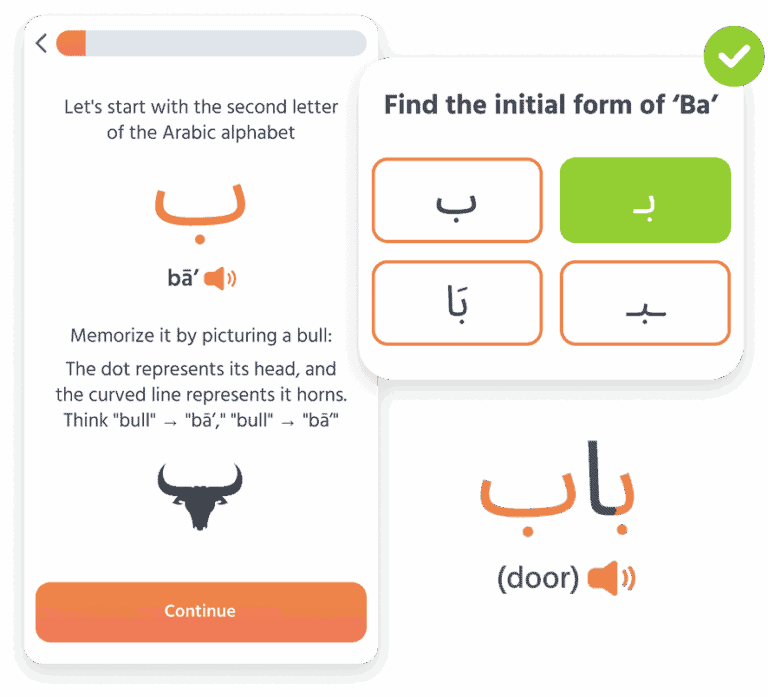
For example, in باب
(door), the ا connects to the ب before it, but it can’t reach forward to the second ب, so that final ب is written in its separate form.
Two other characters follow their own rules: ء (hamza) never connects to anything, and ة (ta marbuta) only appears at the end of a word, so nothing ever follows it.
Which Arabic letters look the same?
Many Arabic letters share the same basic shape and differ only in their dots. In fact, 22 of the 28 letters belong to a family of look-alikes:
- ب ت ث ن ي (especially at the start or middle of a word: بـ تـ ثـ نـ يـ)
- ج ح خ
- د ذ
- ر ز
- س ش
- ص ض
- ط ظ
- ع غ
- ف ق
Only six letters have a shape all their own: ا, ك, ل, م, ه, and و. That’s good news for beginners: once you know a shape, you’ve learned most of a family, and you only need to check the dots.
What are short vowels in Arabic, and why are they missing?
Arabic has three long vowels, written as full letters: ا, و, and ي. Short vowels are small marks written above or below a letter:
- Fatha (ـَ): a small slash above the letter, for a short “a” sound, as in بَ
- Damma (ـُ): a small curl above the letter, for a short “u” sound, as in بُ
- Kasra (ـِ): a small slash below the letter, for a short “i” sound, as in بِ
In everyday writing, like news sites, signs, and text messages, these marks are almost always left out, and native readers fill in the vowels from context. You’ll mostly see them in children’s books, textbooks, the Quran, and learning materials, so start with fully marked texts and move to unmarked ones as common words become familiar.
Is the Arabic alphabet the same in every dialect?
Yes. Every variety of Arabic, from Modern Standard Arabic to Levantine, Egyptian, Gulf, and Darija, uses the same 28-letter alphabet, so you only need to learn it once. What changes is how some letters are pronounced. For example, ق is usually pronounced as a glottal stop in city speech in the Levant and Egypt, and ج sounds like the “g” in “go” in Egyptian Arabic.
Dialects are mainly spoken, but people write them too, especially on social media and in text messages, using the same letters. That’s why the Arabic alphabet course on Playaling is the same foundation whichever dialect you plan to learn.
New to Arabic? Start with the Playaling alphabet course
If all of this looks like a lot to take in, you don’t have to memorize it on your own. Playaling’s Arabic Alphabet course takes you from zero to reading in 35 short lessons, including review lessons along the way and a final assessment at the end. Each lesson introduces a letter with clear audio, shows how its shape changes depending on its position in a word, and puts it to work in real words right away.
The next step: Learn Arabic with real-world videos
Once you can sound out words, you’ll want to start focusing on vocab, phrases, and how to form basic sentences. At Playaling, you’ll learn with courses, exercises and interactive videos. Our diverse library has it all—from everyday conversations and cultural moments to music videos, TV and movie clips, influencer content, news broadcasts, and inspiring talks.
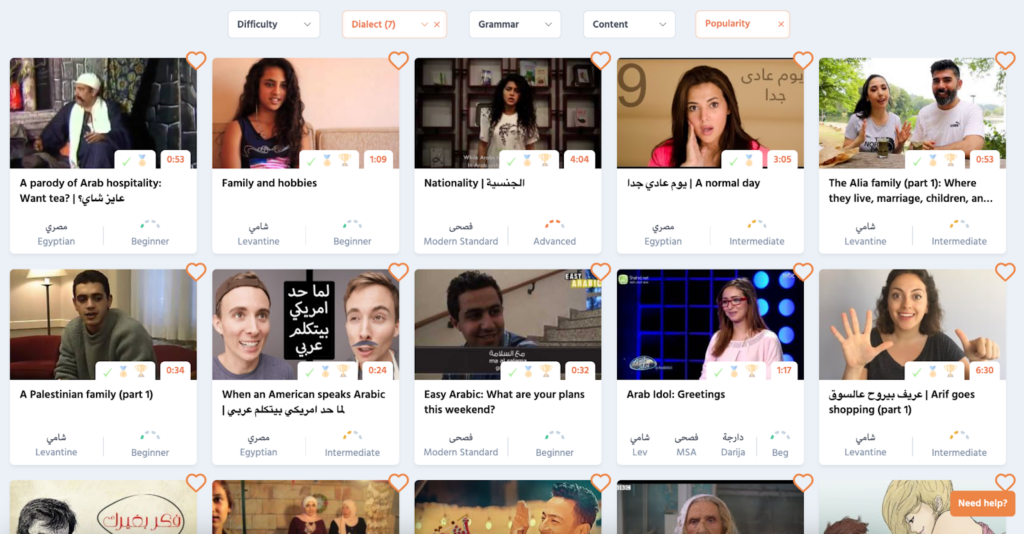
Our interactive captions let you tap any word for instant translations, context, and audio. So, real world Arabic content becomes accessible with just a click. Miss something? No problem—rewind and listen as often as you need, or hover over subtitles for quick definitions.

Spot a word you want to learn? Save it to your personalized word set, or dive into curated sets for focused practice and easy review.
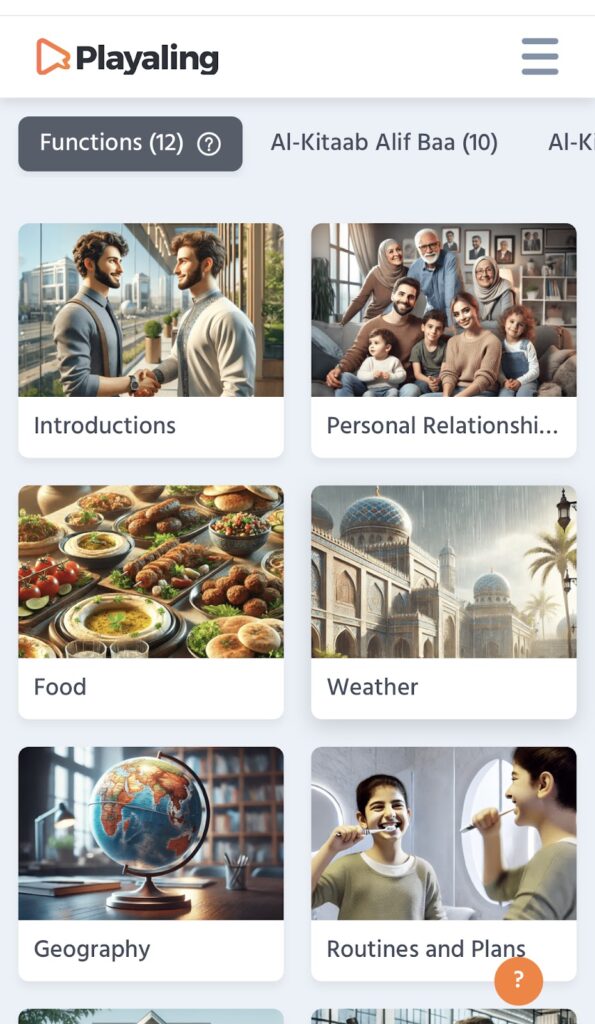
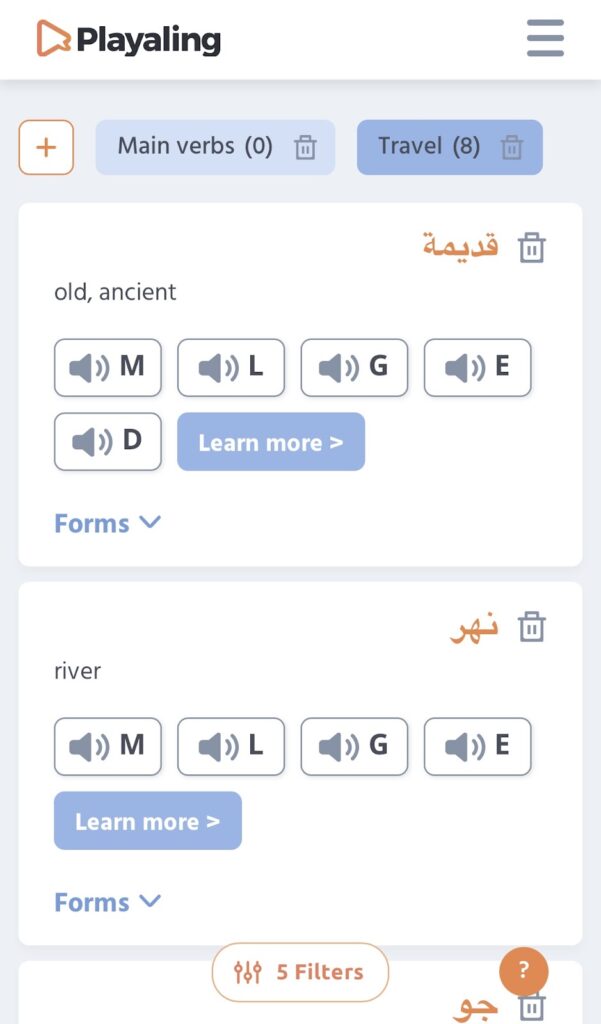
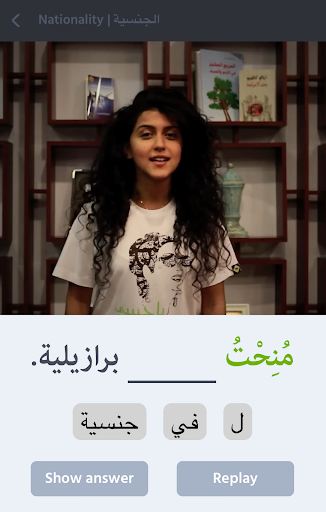
Interactive exercises let you dive in and practice what you’ve learned.
Need to look something up? The Audio Dictionary has you covered with clear human pronunciations and real world examples.

It’s a learning experience that keeps you engaged, bringing authentic, real-world Arabic closer to you every step of the way.
Give it a try!