If you spend any time around Egyptians , you’ll quickly hear يا لهوي
— a loud, expressive exclamation used in moments of shock, fear, sudden panic, or theatrical exaggeration. Two short words, but a whole world of emotion.
Uses and meanings of “ya lahwi” in Egyptian Arabic Here’s how Egyptians actually use يا لهوي
in daily life 👇
Sudden shock This is the most common use — unexpected news, surprising events, unbelievable facts — all trigger a quick, instinctive يا لهوي
Your friend tells you the rent doubled this year.
In this funny Egyptian clip , you’ll hear the phrase “ya lahwi” used to express shock when someone says they’re vegetarian — something still quite uncommon in much of the Arab world. Don’t miss watching the full scene!
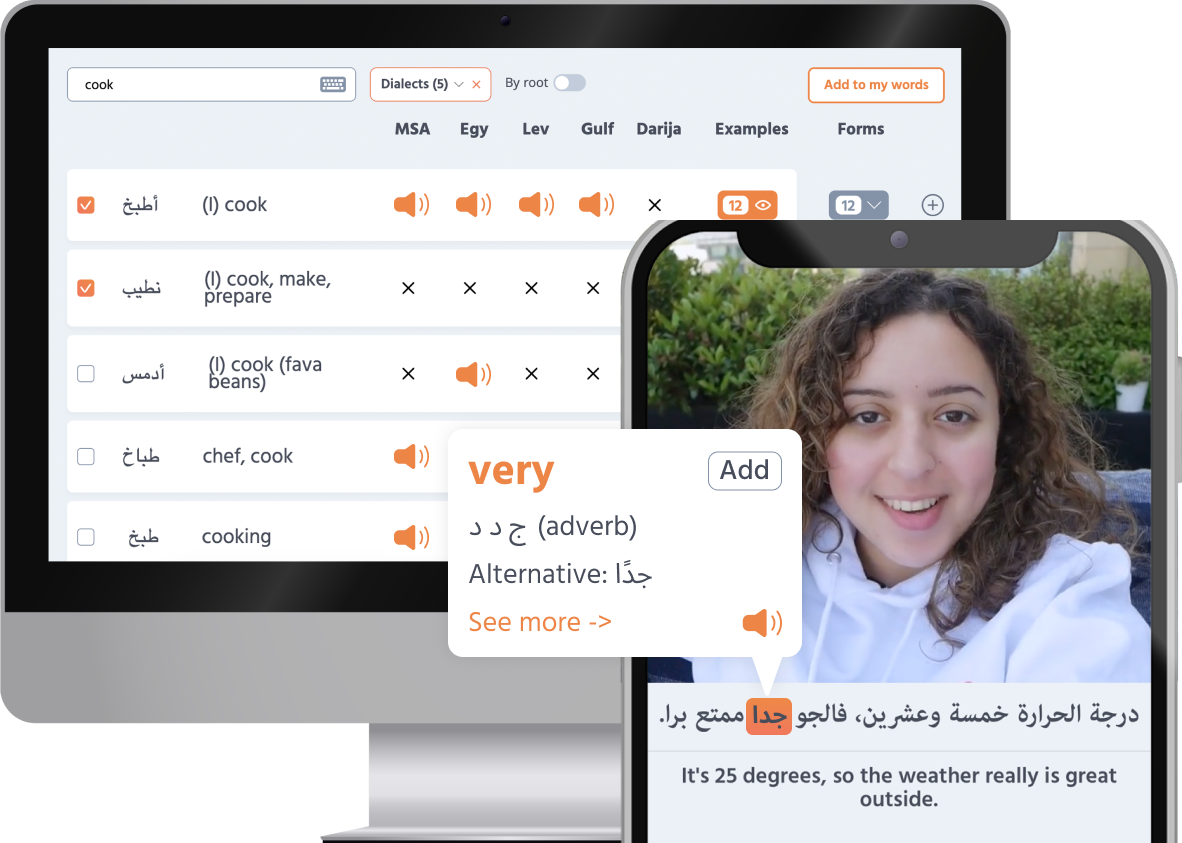
Get free Arabic videos with interactive captions for your level
Get free videos
Fear or sudden alarm Often used when someone gets startled or frightened, whether the fear is real or exaggerated.
A child almost drops a glass.
Dramatic overreaction (humor) This version shows pure Egyptian flair for theatrical exaggeration — getting dramatic over something small but sounding like it’s a big deal.
You tell your friend you woke up just ten minutes late.
This is classic Egyptian comedic drama — emotional, exaggerated, and very expressive.
The guy overreacts and says “ya lahwi” when he realizes the falafel vendor doesn’t know the French word pantacourt (cropped trousers), assuming it must be some kind of underwear. Adding an object In this pattern, يا لهوي
is followed by على
and the thing causing the emotion. This directs the feeling toward a specific situation, and it’s often used to express embarrassment, regret, or alarm.
يا لهوي على ذوقي نسيت أسلّم على الراجل
It’s flexible, expressive, and very common in everyday speech .
And the same يا لهوي على
form can also express positive surprise or admiration, especially in playful or excited tones.
!يا لهوي على الجمال
This version carries joyful surprise rather than panic or regret.
In this segment from a video about the Amazigh of Egypt , we see the stunning salt lake in the Siwa Oasis — and the guy’s genuine amazement at its beauty. Who uses it
Extremely common among women (urban and rural)
Men use it too, but often playfully
Can sound old-school , dramatic , or motherly depending on tone
In comedy, performers exaggerate it for effect
Quick, loud, expressive — unmistakably Egyptian
Where does it come from? Linguists generally trace يا لهوي
back to يا إلهي
, a Modern Standard Arabic (MSA)“Oh my God.”
Over generations, it transformed into the uniquely Egyptian, melodic form we hear today — expressive, dramatic, and instantly recognizable.
Why learn it? Because يا لهوي
is a perfect example of how Egyptians express emotion — shock, fear, comedy, and everything in between. Understanding it helps you feel the emotional rhythm of everyday Egyptian speech.
If you’d like to explore more everyday Egyptian reactions and emotional expressions, check out our guide to expressing dislike in Egyptian Arabic .
Listen for يا لهوي
in Egyptian videos on Playaling . You’ll notice how tone and context change the meaning completely — even though the words stay the same.