Imagine walking through the busy streets of Beirut or Casablanca, where the smell of freshly baked croissants mixes with the rich scent of Arabic coffee. This vivid blend isn’t just culinary—it’s a testament to centuries of intertwined French and Arabic linguistic and cultural exchange. From the golden age of Islam to the colonial era to modern globalization, French influence on Arabic dialects (and vice versa) has sculpted vocabulary, traditions, and even societal norms. But how did these two distinct languages, separated by geography and history, become so deeply interconnected?
The French-Arabic linguistic connection
The relationship between the French and Arabic languages spans centuries, marked by colonial history, trade, migration, and cultural exchange. As a result, French influence on Arabic is undeniable, especially in North African dialects like Algerian, Moroccan (Darija), and Tunisian Arabic. Conversely, Arabic has also left a significant imprint on French, especially through the contributions of medieval scholars, trade, and culinary exchanges.
This linguistic interplay is more than just borrowed words; it reflects deep historical ties, social integration, and the evolution of both languages over time. From everyday vocabulary to legal and academic jargon, this article explores how French has shaped Arabic and vice versa, with a special focus on loanwords and the cultural implications of language exchange.
French influence on Arabic: How colonization and culture shaped vocabulary
The story begins with Napoleon’s 1798 expedition to Egypt, which ignited France’s fascination with the Arab world. Fast forward to the 19th and 20th centuries, France colonized large parts of the Arab world, particularly in North Africa—Algeria, Tunisia, and Morocco—where French became the official language of administration, education, and commerce. Over time, Arabic dialects in these regions absorbed a vast number of French loanwords, many of which are still widely used today.
Unlike the Maghreb, Egypt was never colonized by France, but French influence came through Napoleon’s invasion (1798–1801) and later through the 19th-century modernization efforts of Muhammad Ali, who brought in many French experts. The elite and upper classes in Egypt used French extensively in the 19th and early 20th centuries, particularly in law, education, and diplomacy. Today, English has surpassed French in importance, but some French loanwords remain in Egyptian Arabic, especially in older vocabulary.
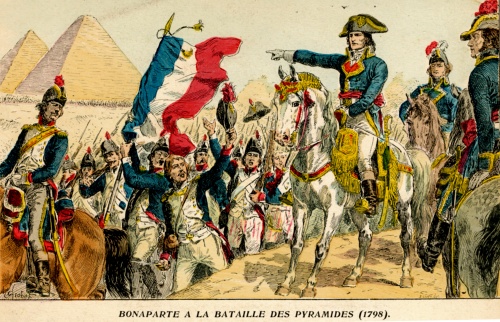 1798 – Napoleon Bonaparte at the Battle of the Pyramids. LouisG12, CC BY-SA 4.0, via Wikimedia Commons.
French influence on Levantine dialects (Lebanon and Syria)
Both the Lebanese and Syrian dialects were shaped by the French mandate (1920–1946), but the extent of influence varied. In the Lebanese dialect, French remains deeply present in education and media, especially among Francophone communities.
In contrast, while the Syrian dialect underwent stronger Arabization after independence, many French loanwords—such as blouse, salon, and pantalon—are still common in everyday Syrian Arabic.
Listen to how ‘blouse’ is said in Lebanese Arabic.
Get free Arabic videos with interactive captions for your level
French influence on Moroccan dialect (Darija)
French influence in Morocco dates back to the early 20th century when France established a protectorate over the country (1912–1956). During this period, French became the dominant language in administration, education, and business. Even after independence, Morocco maintained strong ties to the French language, and today, it is still widely spoken, especially in urban areas and professional settings. Moroccan Arabic (Darija) has absorbed numerous French words, particularly in fields like transportation, education, and technology.
French influence on Algerian dialect
Algeria has the strongest French linguistic influence among Arab countries due to 132 years of French colonization (1830–1962). French was imposed as the primary language of education and administration, displacing Arabic. Even after independence, French remained deeply embedded in Algerian society, and today, many Algerians speak a mix of Arabic and French in daily conversations. This has led to code-switching, where people seamlessly switch between Arabic and French within a single sentence.
French influence on Tunisian dialect
Tunisia was under French protectorate rule from 1881 to 1956, during which French was the official language of administration and education. After independence, Arabic was reinstated as the official language, but French remained dominant in higher education, business, and media. Today, many Tunisians are bilingual, and their dialect تونسي
(Tounsi) features a substantial number of French loanwords, particularly in professional and technical fields.
Common French loanwords in Arabic dialects
The most heavily impacted were due to long periods of colonization. In Lebanon and Egypt, French influence is more historical and social rather than a dominant linguistic force.
Note: Most of the following words entered Arabic dialects directly from French, especially during and after the colonial era. However, some may have reached Arabic through other European languages—such as English or Italian—or have developed meanings that differ slightly from their original French usage.
The following table shows the most common French loanwords in Arabic dialects:
| Arabic Word | French Origin | English Meaning | Egyptian | Levantine | Darija | Gulf |
| بروفيسور | professeur | professor |
|
| x | x |
| صالون | salon | formal living room |
|
|
| x |
| صالون | salon | hair salon |
|
|
|
|
| بلوزة | blouse | blouse |
|
|
|
|
| كرتون | carton | cardboard |
|
| x |
|
| بابور | vapeur | Ship | x | x |
| x |
| سشوار | séchoir | hairdryer |
|
|
|
|
| أوتيل | hôtel | hotel |
|
|
| x |
| مانيكير | manucure | nail polish (in Arabic use) |
| x | x | x |
| مناكير | manucure | nail polish (in Arabic use) | x |
| x |
|
| بودرة | poudre | powder |
|
|
| x |
| دوش | douche | shower |
|
|
| x |
| كلسون | caleçon | underpants |
|
| x | x |
| جرسون | garçon | waiter |
|
| x | x |
| نرفز | nerveux | (he) got on someone’s nerves |
|
| x | x |
| فريز | fraise | strawberry | x |
|
| x |
| شيك | chic | chic / stylish |
|
|
|
|
| كارت | carte | card |
|
|
|
|
| بنطلون | pantalon | chic/stylish |
|
| x |
|
| بسكليت | bicyclette | bicycle | x |
|
| x |
| بوليس | police | police |
|
|
| x |
| جراج | garage | garage |
| x |
|
|
| كراج | garage | garage | x |
| x |
|
| كرواسون | croissant | croissant |
|
| x |
|
| كرواسان | croissant | croissant | x |
|
| x |
| إيشارب | écharpe | scarf |
|
| x | x |
| أباجورة | abat-jour | lampshade |
| x | x |
|
| دبرياج | débrayage | clutch (car) |
|
| x | x |
| كبّوت | capot | car hood |
| x | x | x |
| كبّوت | capote | condom | x |
| x | x |
| كلوت | culotte | pantie |
| x | x | x |
| كيلوت | culotte | underwear | x |
|
|
|
| ميوه | maillot | swimsuit |
|
|
|
|
| بكالوريا | baccalaureat | high school diploma | x |
|
| x |
| باك | baccalaureat | high school diploma | x | x |
| x |
| بلاج | plage | beach |
| x |
| x |
| سا فا؟ | ça va? | how are you? (in Lebanese) | x |
| x | x |
| برافو | bravo | bravo |
|
|
| x |
| ميرسي | merci | thank You |
|
| x | x |
| كاسكيت | casquette | cap | x |
| x | x |
| دوسيه | dossier | file/folder |
| x |
| x |
| بلكون | balcon | balcony | x |
|
|
|
| بلكونة | balcon | balcony |
|
| x |
|
| أتوبيس | autobus | bus |
| x | x | x |
| مكياج | maquillage | makeup |
|
|
|
|
| أسانسير | ascenseur | elevator |
|
| x | x |
| كادو | cadeau | gift |
| x |
| x |
| شوفير | chauffeur | driver | x |
|
| x |
| كوافير | coiffeur | hairdresser |
|
| x | x |
| تليفون | téléphone | telephone |
|
|
|
|
| تلفزيون | télévision | television |
|
|
|
|
| موتور | moteur | motorcycle | x |
|
| x |
| موديل | modèle | model |
|
|
|
|
| ريجيم | régime | diet |
|
|
|
|
| دركسيون | direction | steering wheel (Arabic meaning; orig. “management/direction”) |
|
| x |
|
| كنبة | canapé | sofa |
| x | x |
|
| كنباية | canapé | sofa | x |
| x | x |
| كباريه | cabaret | cabaret |
|
|
| x |
| فيشة | fiche | plug |
|
| x |
|
| سوتيان | soutien | bra |
|
| x |
|
| روج | rouge | lipstick |
| x | x | x |
| جيبة | jupe | skirt |
| x |
| x |
| إتيكيت | étiquette | etiquette |
|
|
| x |
| بالطو | paletot | overcoat |
| x | x |
|
Arabic influence on French: From medieval times to modern language
The influence of Arabic on the French language has evolved over centuries, with notable contributions in modern times. Historically, many Arabic terms entered French indirectly through other Romance languages, such as Spanish and Italian, during the Middle Ages. In contemporary France, particularly in urban areas with significant North African immigrant populations, Arabic has directly contributed to French slang and colloquial expressions.
How Arabic words entered the French language
The influence of Arabic on French predates the colonial period and stems primarily from the Golden Age of Islam (8th-13th centuries). During this time, Arabic-speaking scholars made groundbreaking contributions to science, mathematics, medicine, and philosophy, many of which found their way into the French lexicon.
Here are some Arabic-origin words in French:
| Standard Arabic | French equivalent | English meaning |
| قهوة
| café | coffee |
| الكحول
| alcool | alcohol |
| سفر
| safari | journey, adventure |
| سُكّر
| sucre | sugar |
| كيمياء
| chimie | chemistry |
| الجبر
| algèbre | algebra |
| صفر
| zéro | zero |
| أمير البحار
| amiral | admiral |
Note: Some words reached French through intermediary languages such as Spanish, Italian, or Latin, but their ultimate origin is Arabic.
Arabic’s impact on French scientific and technical vocabulary
Many words related to mathematics, astronomy, and medicine originate from Arabic, largely due to medieval Arab scholars who preserved and expanded upon Greek knowledge before passing it to Europe. Key terms include:
- Syrup & Elixir: Originated from Arabic medicinal practices from شراب
and الإكسير
.
- Alchimie (Alchemy): Rooted in Arabic الخيمياء
.
- Zenith (from Arabic سمت الرأس
, “path/way of the head”) and Nadir (from نظير السمت
, “opposite of the zenith”) are astronomical terms that entered European languages through Latin translations of Arabic astronomical texts during the Middle Ages.
Beur identity in France: Linguistic rebellion and cultural hybridity (1980s–present)
From Arabe to Beur: Verlan, marginalization, and the birth of a subculture
The term Beur—born from verlan (French slang that inverts syllables, turning Arabe into Beur)—epitomizes the complex identity of second- and third-generation North Africans in France. Emerging in the 1980s, this label became a badge of defiance for youths straddling Maghrebi heritage and French secularism. Their parents migrated post-WWII as laborers (les travailleurs immigrés), but Beurs grew up in the banlieues (suburbs), navigating systemic racism and a Franco-Arabic linguistic limbo. While fluent in French, many spoke fragmented Arabic, leading to hybrid phrases like “Miskina, j’suis claqué” (Poor thing, I’m exhausted)—mixing Algerian Arabic with colloquial French.
The marche pour l’égalité and the politics of belonging
The 1983 Marche pour l’égalité et contre le racisme (March for Equality and Against Racism)—dubbed the Marche des Beurs—marked a turning point. Organized by Beur activists, this 1,000 km protest from Marseille to Paris demanded an end to police brutality and housing discrimination. Though it briefly rallied national support, the movement splintered as politicians co-opted its rhetoric without enacting real change. Yet, it birthed a cultural renaissance: Beur artists like rapper MC Solaar and novelist Leïla Sebbar blended French literary tradition with Maghrebi storytelling, while films like La Haine (1995) exposed suburban alienation.
| Beur cultural milestones | Significance |
| Le Thé au Harem d’Archi Ahmed (Mehdi Charef, 1983) | First Beur novel depicting banlieue life |
| Hexagone (1994) by rapper Kamelancien | Pioneering Beur hip-hop addressing identity |
| Beur sur la ville (2011 film) | Satire on media stereotypes of Beurs |
From stereotypes to rebeu: Evolving identity in the 21st century
By the 2000s, Beur faced criticism for its media-driven exoticism. Terms like beurette (female Beur) were sexualized, echoing colonial Orientalist tropes. Younger generations now embrace rebeu or renoi (Black-beur solidarity), while activists reject labels altogether, asserting Franco-Maghrebi or Musulman français. Yet, the Beur legacy persists in France’s multicultural fabric: Ramadan ads by Carrefour, Franco-Algerian rapper Soolking’s global hits, and political figures like Najat Vallaud-Belkacem, France’s first Muslim cabinet minister.
Linguistic innovation: Verlan, Arabizi, and code-switching
Beur speech reshaped French slang. Verlan terms like rebeu (re-inverted Beur) and chelou (louche, shady) entered mainstream French, while Arabizi (Arabic-French texting hybrids) emerged:
- (Wech) from Algerian Arabic ويش
: (Hey!)
- (Miskina) مسكينة
: (Poor girl,) used ironically among friends
- (Inch’Allah) إن شاء الله
: (God willing,) used mainly by French speakers of Arab origin; often means “maybe” or “not sure,” not always religious.
The influence of Arabic on modern French is particularly evident in slang and informal speech, largely due to historical colonial ties and ongoing cultural interactions. Many Arabic words, especially from North-African Arabic dialects, have been integrated into French, primarily through urban slang spoken in immigrant communities. Here are some examples:
| French word | English meaning | Arabic origin | Arabic dialect |
| baraka | luck, blessing | بركة
| Darija |
| baroud | combat, fight | بارود
| Darija |
| belek | watch out! | بالك
| Darija |
| bézef | a lot (pas bézef: not much) | بزاف
| Darija |
| bled | remote village | بلد
| Darija |
| caïd | chief | قائد
| Darija |
| caoua (kawa) | coffee | قهوة
| Darija |
| casbah | old city / citadel | قصبة
| Darija |
| chouf | look! | شوف
| Darija |
| chouiya | a little | شوية
| Darija |
| clebs | dog | كلب
| Darija |
| flouze | money | فلوس
| Darija |
| guitoune | tent, shelter | قيطون
| Darija |
| hagra | misery, injustice | حقرة
| Darija |
| hèbs | prison | حبس
| Darija |
| kif | drug | كيف
| Darija |
| kiffer | to enjoy | كيف
| Darija |
| macache | nothing | ما كان شيء
| Darija |
| nouba | party | نوبة
| Darija |
| razzia | raid, pillage | غزوة
| Darija |
| souk | mess, market, bazaar | سوق
| Darija |
| toubib | doctor | طبيب
| Darija |
| walou | nothing at all | والو
| Darija |
| yaouled | young Arab | أولاد
| Darija |
| zarma | supposedly | زعما
| Darija |
| zetla | hashish | سطل
زطل
| Darija |
FAQs about French and Arabic linguistic influence
1. How many Arabic words are in the French language?
French has over 500 words of Arabic origin, primarily in science, trade, and food-related fields.
2. Why do North African dialects have so many French words?
Due to French colonization, many Arabic dialects, especially Algerian, Tunisian, and Moroccan Darija, adopted a substantial number of French loanwords.
3. Did Arabic influence the French language before colonization?
Yes! Arabic words entered French through science, trade, and medieval scholarly exchanges, long before French colonialism.
4. Are French and Arabic grammatically similar?
No, Arabic and French have vastly different grammar structures, but they share many loanwords and cultural references.
5. Do modern French speakers use Arabic slang?
Yes! In France, particularly in urban areas, many words from Darija and Algerian Arabic are used in everyday slang.
Oh, and by the way…
If learning Arabic at your own pace, with fun, real-world videos sounds like your style, then Playaling could be exactly what you’re looking for!
With Playaling, you’ll dive into any major Arabic dialect or MSA. Our diverse range of videos has it all—from everyday conversations and cultural moments to music videos, TV and movie clips, influencer content, news broadcasts, and inspiring talks.
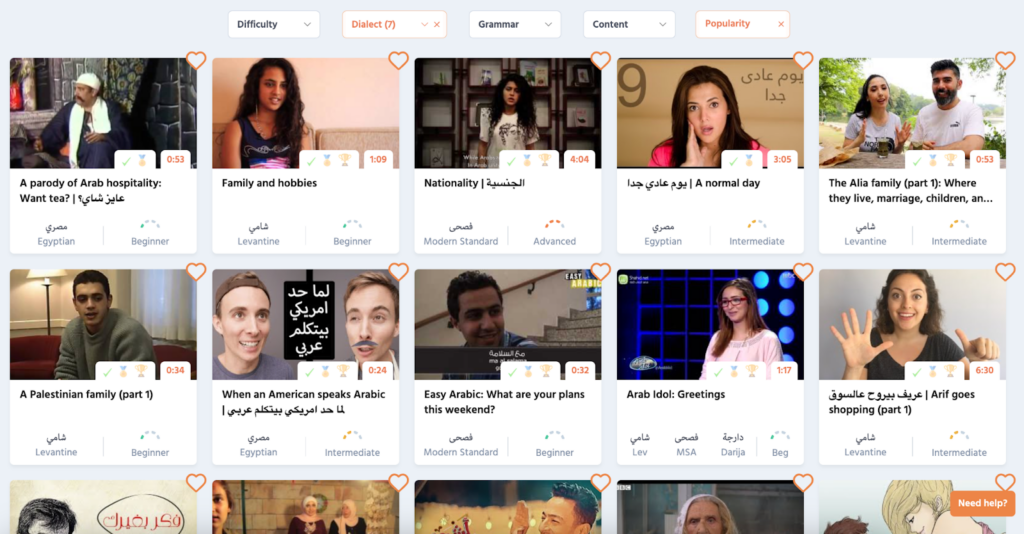
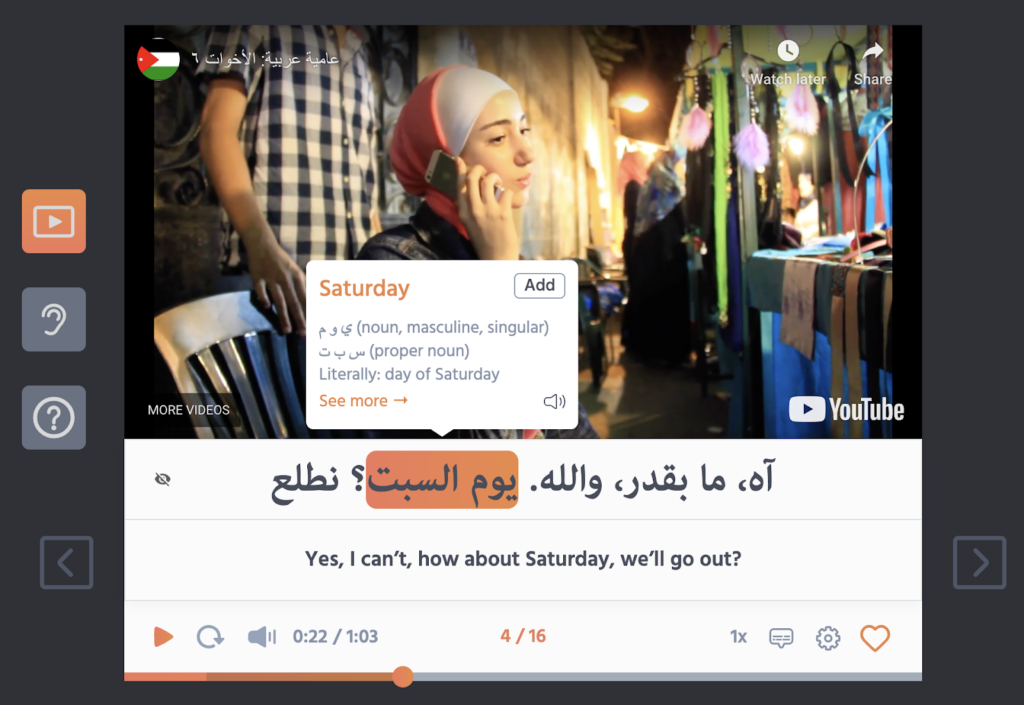
Our interactive captions let you tap any word for instant translations, context, and audio. So, real Arabic content becomes accessible with just a click. Miss something? No problem—rewind and listen as often as you need, or hover over subtitles for quick definitions.
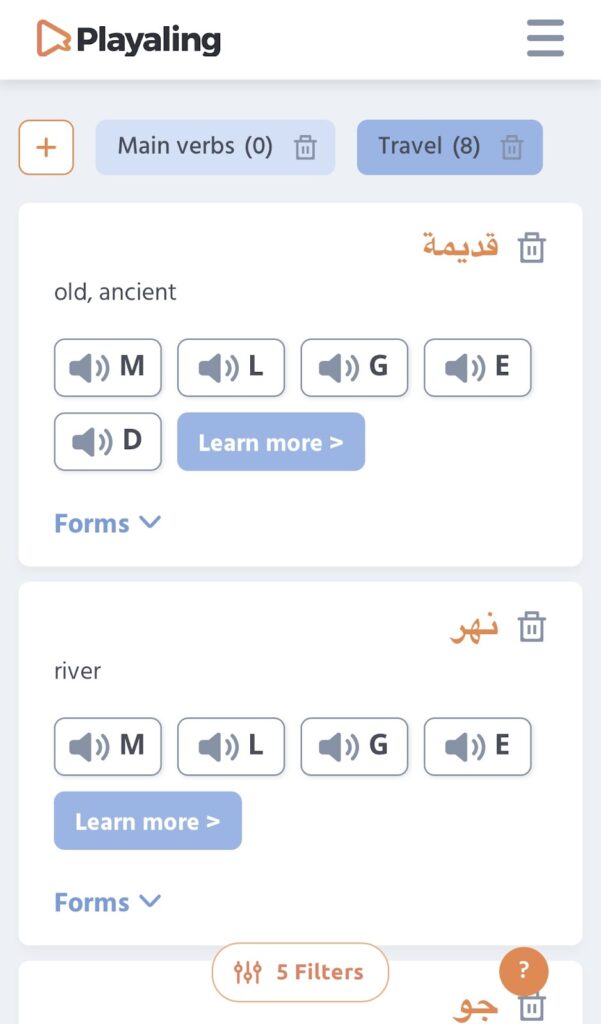
Spot a word you want to learn? Save it to your personalized word set, or dive into curated sets for focused practice and easy review.
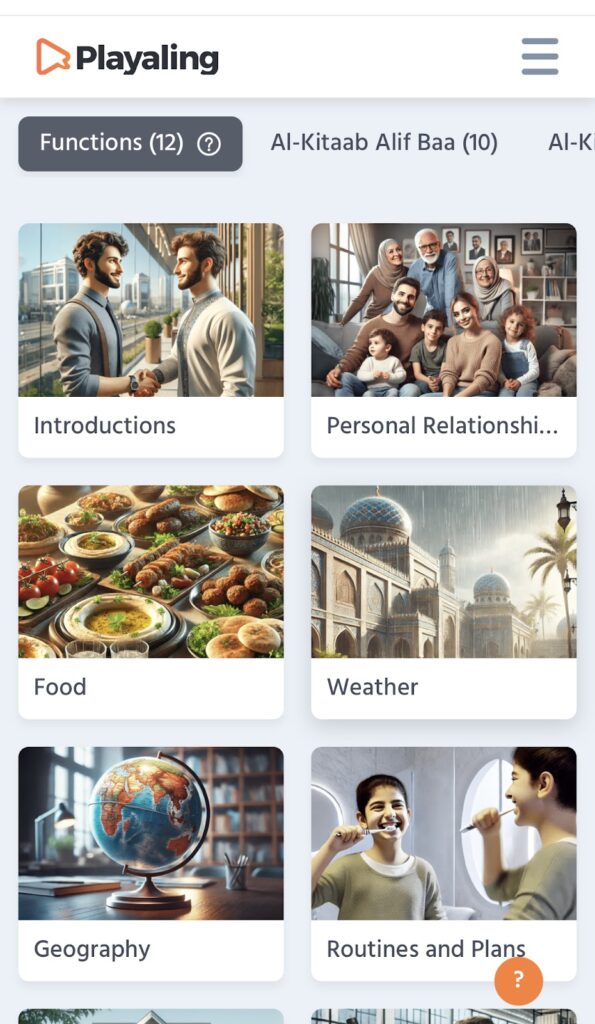
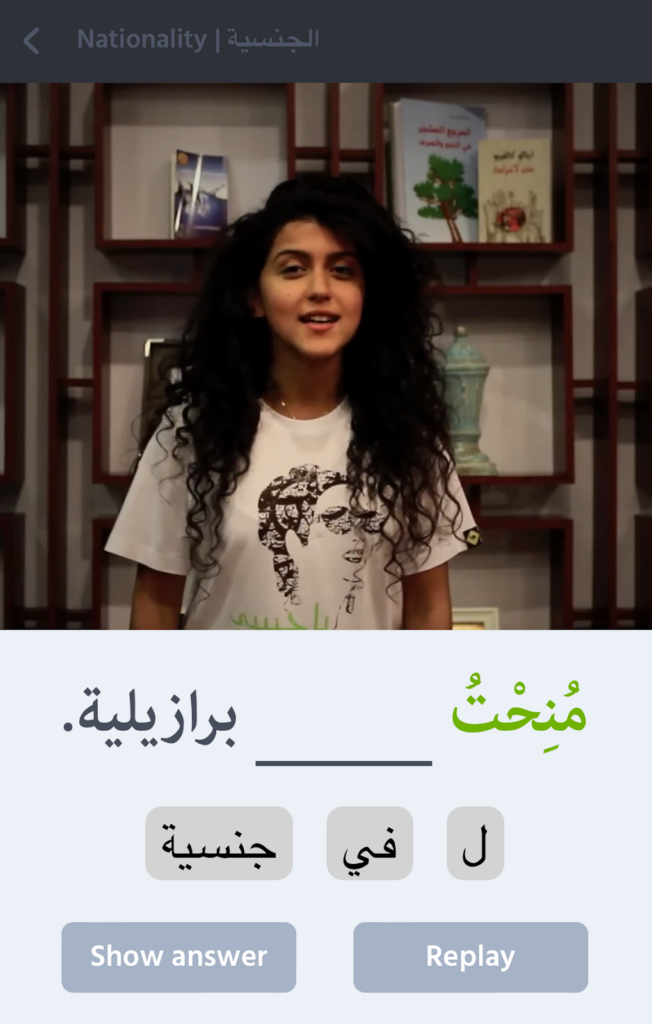
Interactive exercises let you dive in and practice what you’ve learned.
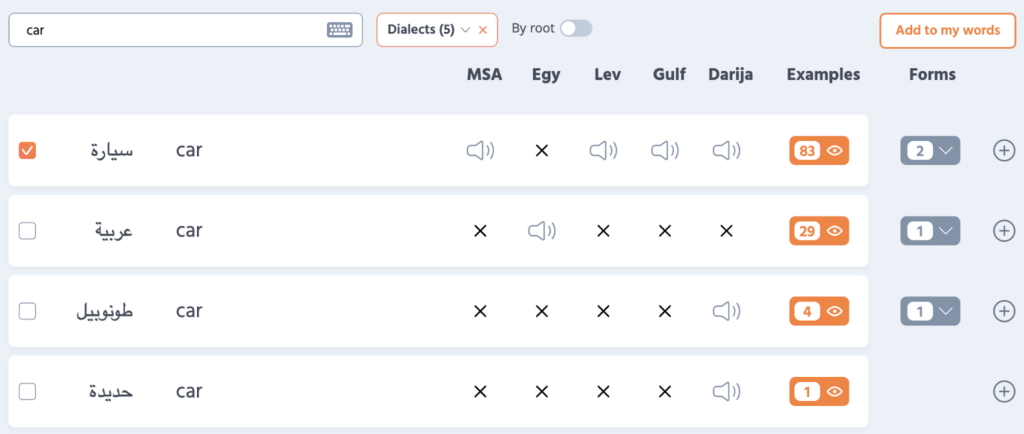
Need to look something up? The Audio Dictionary has you covered with clear human pronunciations and real world examples.
It’s a learning experience that keeps you engaged, bringing authentic, real-world Arabic closer to you every step of the way.
Give it a try!